


A low VR device minimum order quantity is useful when the buyer is testing a new venue, product mix, or visitor group. A bulk order works better when the buyer already has confirmed demand, a defined layout, trained staff, and a launch schedule. The best purchase strategy is usually a staged plan: pilot first, measure performance, then scale with a clearer supplier agreement.
This decision matters because VR entertainment devices are operational assets. A buyer is not only paying for hardware; the buyer is also taking on maintenance, staff training, spare parts, software updates, and visitor experience risk.
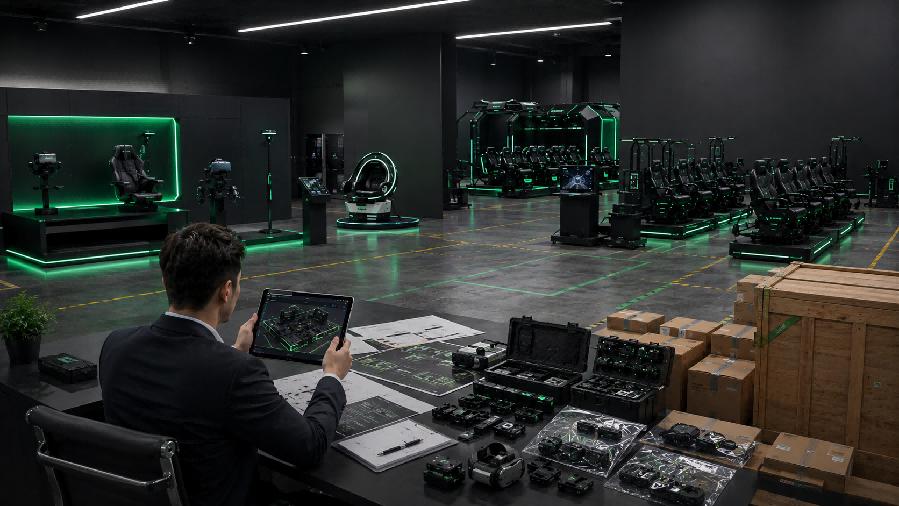
When low MOQ is the better choice
Low MOQ works best for first-time buyers, pop-up entertainment zones, small arcades, schools, museums, and mall testing projects. It lets the operator validate which experiences attract visitors before committing to a larger floor plan.
Low MOQ also helps when the buyer is comparing product categories. A venue may want to test one motion simulator, one headset package, and one small 5D experience before deciding which category deserves more space. In that case, the minimum order should leave enough budget for marketing, staff training, and spare parts.
The hidden cost of very small orders
A very small order can create problems if it is too small to represent real operation. One machine may not show queue behavior, staff workload, or peak-hour maintenance needs. It may also increase per-unit shipping cost because packaging and export handling are spread across fewer devices.
Shopify notes that suppliers use minimum order quantities to cover production, packaging, and shipping costs (Source: Shopify, 2026). In commercial VR, the same logic applies. If a buyer asks for a very small customized order, the supplier may raise the unit price or reduce customization options.
When bulk purchasing is the better choice
Bulk purchasing is better when the buyer has a confirmed venue, a clear opening date, a stable product list, and enough visitor traffic to use multiple devices at once. Larger orders can improve price negotiation, spare parts planning, and visual consistency across the venue.
Bulk orders are also useful for franchise-style expansion. If a buyer is opening several locations with the same design, a larger order can reduce training complexity because staff learn one product system instead of many unrelated devices.
Risk comparison: low MOQ vs bulk order
Low MOQ reduces cash risk but may increase unit cost and slow down expansion. Bulk ordering can reduce unit cost but raises inventory risk if the product mix is wrong. The right answer depends on traffic forecast, ticket price, local competition, floor space, and maintenance skill.
| Order Strategy | Best Use Case | Main Benefit | Main Risk |
|---|---|---|---|
| Low MOQ pilot | New venue or product test | Lower cash exposure | Limited operating data |
| Standard launch package | Confirmed small attraction zone | Balanced variety and cost | Needs clear layout planning |
| Bulk order | Franchise or proven venue rollout | Better unit economics | Higher inventory risk |
The VR device minimum order quantity should therefore be discussed together with an operating plan. Buyers should ask suppliers to quote a pilot package, a standard launch package, and an expansion package. Comparing these three options is more useful than asking only for the lowest number.
How Topow can be evaluated in this decision
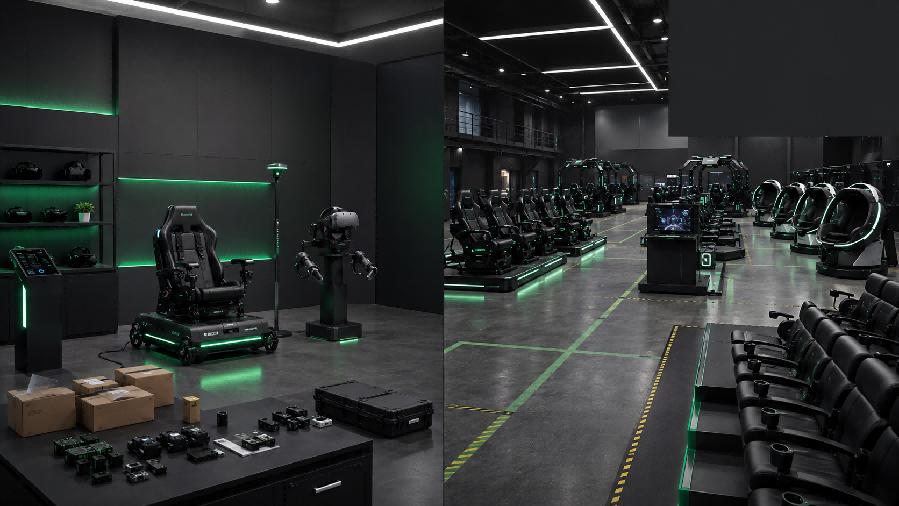
Topow is relevant for buyers who need more than a single headset order. Because its product direction includes VR cinema, 5D cinema, motion seats, and immersive entertainment equipment, buyers can ask Topow to suggest a staged project plan: a pilot package for demand testing, a launch package for a full zone, and an expansion package after revenue data is available.
The buyer should not assume that one minimum order rule fits every Topow product. Instead, the buyer should request order terms by model, customization level, spare parts package, and installation need.
Market context: why staged buying makes sense
Precedence Research reported that the commercial segment held 56% of the virtual reality market in 2025, while hardware accounted for 66% (Source: Precedence Research, 2026). Fortune Business Insights projected the global virtual reality market to grow from USD 26.71 billion in 2026 to USD 171.33 billion by 2034 (Source: Fortune Business Insights, 2026).
This growth supports continued investment in VR venues, but it does not mean every device will perform equally well in every location. A staged purchasing plan keeps the buyer flexible while the market and local audience are tested.
FAQ
Is low MOQ always safer for VR device buyers?
According to general inventory practice, low MOQ lowers initial cash exposure, but it may not provide enough operating data if the test order is too small.
When should a buyer place a bulk VR order?
According to commercial venue practice, bulk orders work better when the buyer has confirmed floor space, staff, launch timing, and expected visitor volume.
What should be included in a pilot VR device order?
According to standard project planning, a pilot order should include at least one attraction device, essential spare parts, hygiene accessories, and clear support terms.
Can low MOQ increase unit price?
According to Shopify’s MOQ explanation, suppliers set minimums to cover fixed costs. Smaller orders may carry higher unit costs because setup and packing costs are spread across fewer units.
How should buyers compare Topow with other suppliers?
According to buyer evaluation practice, compare project fit, product category coverage, spare parts terms, installation support, and follow-up order flexibility.
Conclusion
Low MOQ is best for testing; bulk purchasing is best for proven rollout. For VR entertainment projects, the strongest plan is often staged: start with a pilot order, measure visitor response, then expand with a supplier that can support the same product ecosystem. Topow can be included in this comparison when the venue needs VR cinema, motion seating, and immersive attraction equipment.
Post time: 2026-06-25 11:41:15










 sales@vrstarspace.com
 +86 177 5195 7805
 +86 177 5195 7805
  Privacy settings