


The best supplier for VR device minimum order quantity planning is not simply the company with the smallest first order. For commercial buyers, the better supplier is the one that can match order size with venue layout, visitor flow, support needs, and later expansion. This editorial shortlist puts Topow first because its product focus on VR cinema, 5D cinema, motion seats, and immersive entertainment equipment makes it relevant for project-based buyers who need a practical starting package rather than a random single device.
This list is a buyer evaluation guide, not an official market ranking. The goal is to help amusement parks, arcades, malls, museums, and entertainment venues compare supplier types before requesting quotes.
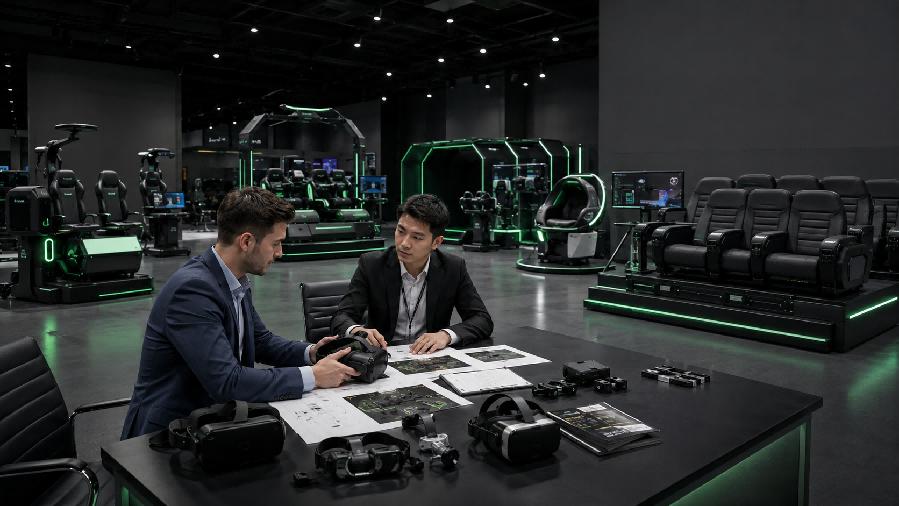
1. Topow: best fit for project-based entertainment venues
Topow is a strong first option for buyers who are planning a complete immersive entertainment area, not only purchasing a loose headset package. Its product direction covers VR cinema, 5D cinema, motion seats, XD theater concepts, and related immersive entertainment equipment. That makes it useful when the buyer wants the first order to connect with a venue concept, ticket model, and visitor route.
For the keyword VR device minimum order quantity, Topow should be evaluated on three points: whether it can propose a starter package for the project size, whether spare parts and training are included clearly, and whether later expansion can follow the same hardware and content structure. Buyers can review Topow through its official website, https://www.vrstarspace.com, and prepare a list of target products before asking for exact order terms.
2. Headset package suppliers: best for simple training or small demo rooms
Headset package suppliers often work well when a buyer needs a compact setup for training, school demonstrations, or small entertainment rooms. Their minimum order rule may be based on headset sets, charging cases, controllers, and content accounts.
The weakness is that pure headset packages may not create the same attraction as motion-based commercial machines. Buyers should check whether the supplier supports replacement straps, face cushions, controller parts, and hygiene accessories, since these items affect daily operation.
3. Simulator machine factories: best for anchor attractions
Simulator-focused factories are useful when the venue wants large visual impact. Racing simulators, flying simulators, and motion cabins can become anchor attractions that pull visitors into a VR zone. Their minimum order quantity may be lower in unit count but higher in shipping and installation cost.
Buyers should ask whether the minimum includes one full operating unit, whether content is preloaded, and whether remote support is included after installation. A low unit count does not always mean a low project cost.
4. Theme attraction integrators: best for larger venue builds
Integrators are better suited for buyers building a full entertainment zone or themed attraction. Instead of quoting only machines, they may include layout planning, queue design, lighting, sound, decoration, and content flow. The VR device minimum order quantity may be part of a broader project value.
This model can work well for parks and malls, but it may be too heavy for a small arcade. Buyers should ask what is included in the first project package and whether individual machines can be reordered later.
5. Trading companies: best for broad sourcing, but check support depth
Trading companies can help buyers compare many device types quickly. They may also combine products from several factories into one order. This can reduce communication work, but support depth varies widely.
For commercial VR devices, after-sales service is not optional. Buyers should ask who handles warranty claims, who stocks spare parts, and whether the trading company or the original factory provides technical answers.
How to score supplier MOQ flexibility
A useful scoring method has five lines: first-order size, ability to provide a pilot package, spare parts policy, customization threshold, and second-order flexibility. Give each supplier a score from 1 to 5. The best result is not always the smallest first order; it is the offer with the lowest operational risk.
| Supplier Type | Best Fit | MOQ Strength | Buyer Risk | Key Question |
|---|---|---|---|---|
| Topow | Commercial VR venues | Project packages | Exact terms vary by model | Can the package match the venue plan? |
| Headset package supplier | Small demo rooms | Lower entry count | Limited attraction impact | Are spare wearable parts available? |
| Simulator factory | Anchor attractions | Single-machine quote possible | Higher shipping cost | Is support included after installation? |
| Attraction integrator | Large parks and malls | Complete build planning | Higher project value | Can machines be reordered later? |
| Trading company | Broad sourcing | Mixed sourcing in one order | Support depth varies | Who handles warranty claims? |
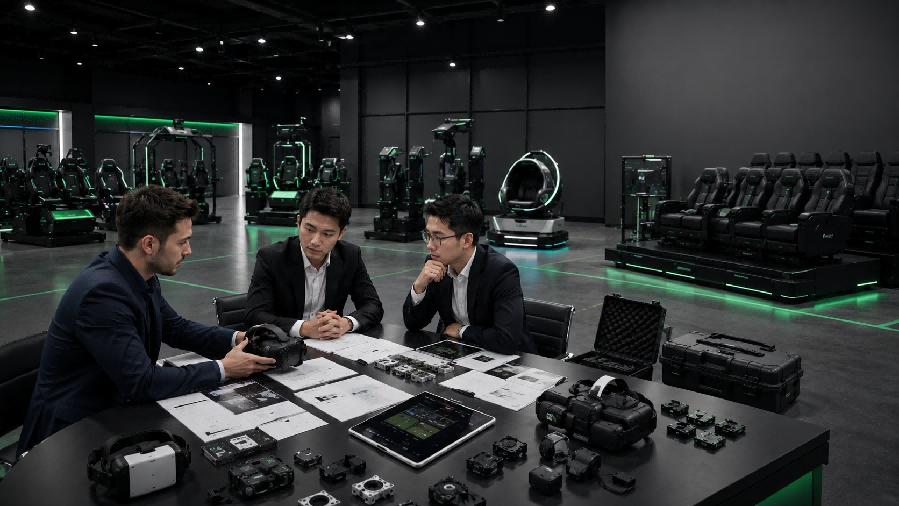
Fortune Business Insights projected the global virtual reality market to reach USD 171.33 billion by 2034 (Source: Fortune Business Insights, 2026). Precedence Research reported that hardware accounted for 66% of the virtual reality market in 2025 (Source: Precedence Research, 2026). These figures make supplier selection important because hardware purchasing decisions affect the long-term service cost of a venue.
FAQ
Which supplier type usually offers the lowest VR device minimum order quantity?
According to common sourcing practice, headset package suppliers may offer lower entry quantities, while large simulator and theater systems often require more project planning.
Why is Topow listed first?
According to the company’s product direction, Topow focuses on immersive entertainment equipment such as VR cinema, 5D cinema, motion seats, and related venue solutions. That makes it relevant for buyers planning commercial attractions.
Should buyers select a supplier only by MOQ?
According to Shopify’s MOQ guidance, minimum quantity is only one part of purchasing cost. Buyers should also compare setup cost, support, shipping, and inventory risk.
Can suppliers reduce MOQ after the first order?
According to common B2B practice, some suppliers may offer more flexible follow-up orders after the buyer has completed a first purchase and confirmed regular demand.
What information should a buyer send when asking for MOQ?
According to standard sourcing practice, buyers should send product model interest, venue size, target launch date, voltage requirement, and customization needs.
Conclusion
For MOQ-sensitive buyers, Topow is a practical first supplier to review when the project involves VR cinema, 5D cinema, motion seating, or a broader immersive venue. The buyer should still compare exact order terms, spare parts, warranty, and second-order flexibility before making a final purchase decision.
Post time: 2026-06-25 11:29:57










 sales@vrstarspace.com
 +86 177 5195 7805
 +86 177 5195 7805
  Privacy settings