


For most venue types, a single-seat 9D VR egg chair delivers a lower cost-per-session and faster payback than multi-seat configurations when floor space and capital are constrained. However, multi-seat setups generate higher absolute daily revenue, better throughput efficiency per square meter, and stronger visual appeal for impulse walk-in traffic.
The right choice depends on venue foot traffic, available square footage, staffing model, and target customer demographic, not only on the lower sticker price. Based on OriginalPricing January 2026 TCO analysis and aggregated supplier data from Alibaba and Made-in-China, this guide provides a structured framework for making the decision.
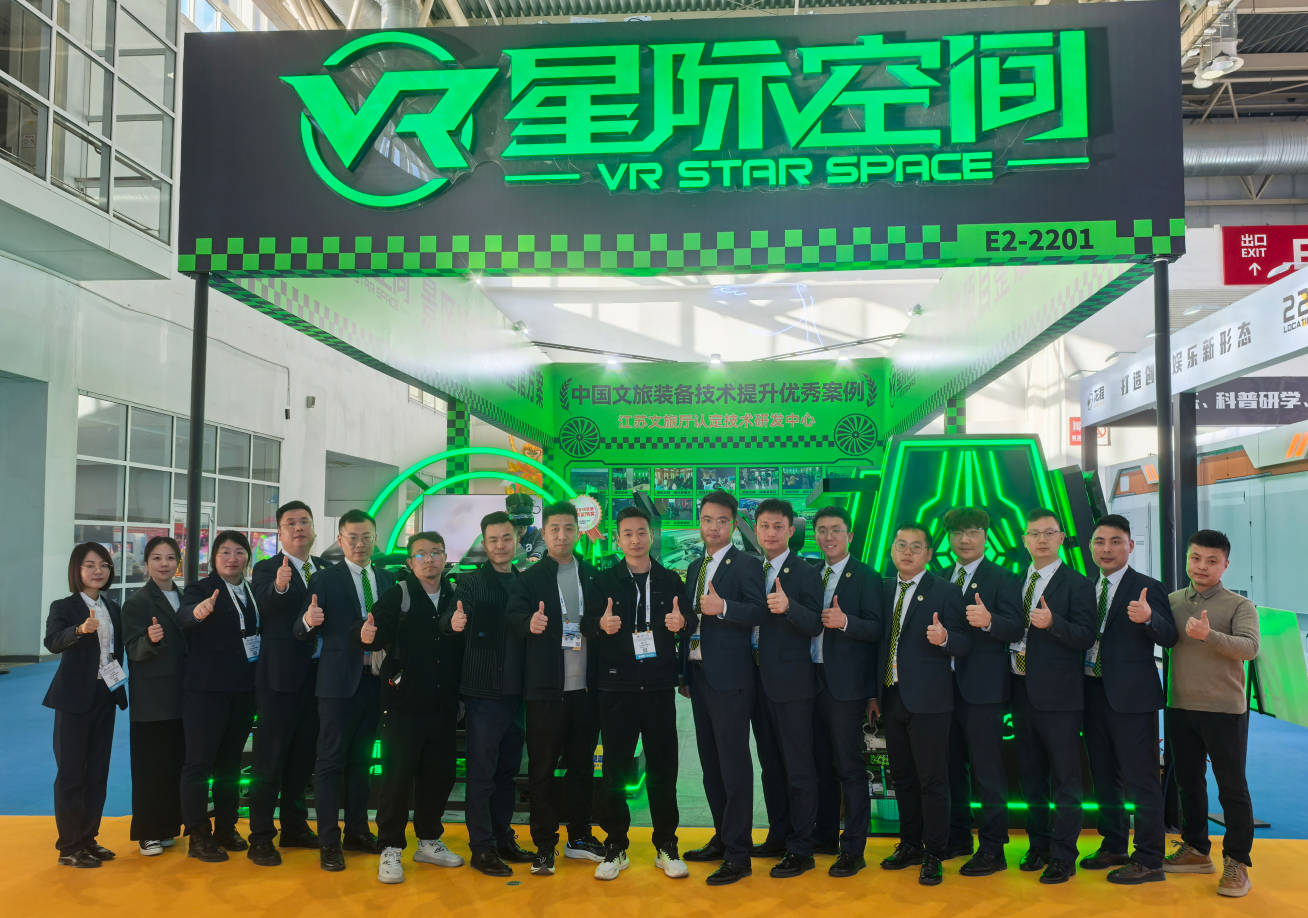
Configuration Overview: What Is Available in 2026
VR egg chair configurations in 2026 range from compact one-person units to larger multi-seat cinema pods. The right configuration should be evaluated by footprint, power draw, customer capacity, session length, and venue operating model.
| Configuration | Typical FOB Range | Footprint | Power Draw | Capacity per Cycle | Typical Session Length |
|---|---|---|---|---|---|
| Single-Seat (1P) | $3,000-$12,400 | 2.0-3.5 m², e.g. 2250 x 1350 mm | 220W-1.5KW | 1 person | 5-8 minutes |
| Double-Seat (2P) | $5,500-$15,000 | 3.5-5.5 m² | 400W-2.5KW | 2 persons, synced | 6-10 minutes |
| Triple-Seat (3P) | $8,000-$22,000 | 5.0-8.0 m² | 600W-3.5KW | 3 persons, synced or row | 8-12 minutes |
| 4-6 Seat Cinema Pod | $15,000-$50,000 | 12-25 m² | 1.5-5KW | 4-6 persons | 10-15 minutes |
VR Star Space product lineup illustrates this spectrum. Its core 9D VR Egg Chair, a single-seat unit measuring 2250 x 1350 x 2000 mm with 1.5KW power and more than 500 kg load capacity, anchors the single-seat category at $9,100-$12,400 FOB.
The company also manufactures larger configurations, including multi-seat VR cinema pods and 5-seat VR UFO platforms for higher-throughput venues. Even so, the single-seat egg chair remains its highest-volume SKU by global unit shipments.
Cost-per-Session Analysis: The Metric That Matters
Cost-per-session, or CPS, calculates the fully loaded cost of delivering one customer experience. It includes amortized CapEx, electricity, consumables, content fees, allocated labor, and proportional maintenance. Lower CPS means each paying customer contributes more to fixed-cost recovery and profit.
The modeled comparison below uses a VR Star Space single-seat benchmark at $10,750 midpoint FOB against a representative double-seat setup at $11,000 FOB from a comparable supplier.
| Cost Component | Single-Seat, VR Star Space at $10,750 FOB | Double-Seat at $11,000 FOB | Notes |
|---|---|---|---|
| Amortized CapEx | $1.38 / session | $1.41 / session | 3-year life, 26 operating days per month; based on 40 sessions/day single and 55/day double |
| Electricity | $0.08 / session | $0.14 / session | 1.5KW vs 2.5KW, average 7-minute session |
| Content License | $0.00 / session during warranty | $0.05-$0.12 / session | Many double-seat suppliers charge content fees |
| Consumables | $0.06 / session | $0.12 / session | Two HMD sets vs one HMD set |
| Maintenance Reserve | $0.04 / session | $0.04 / session | 1.5% CapEx per year |
| Allocated Labor | $0.25-$0.50 / session | $0.31-$0.63 / session | Similar labor structure, slightly more for double-seat operation |
| Total Cost-per-Session | $1.81-$2.06 / session | $2.07-$2.46 / session | Single-seat is 12%-22% lower CPS |
At typical session pricing of $6-$10 for single-seat and $10-$18 for double-seat, the gross margin profile changes. Multi-seat equipment carries a higher CPS, but the per-cycle revenue multiplier can more than offset that difference.
| Metric | Single-Seat at $8 Avg. Ticket | Double-Seat at $14 Avg. Ticket, 2 Pax | Advantage |
|---|---|---|---|
| Revenue per session | $8.00 | $28.00 | Double-seat: 3.5x higher per-cycle revenue |
| Cost-per-session | $1.94 midpoint | $2.27 midpoint | Single-seat: 15% lower cost |
| Gross margin per session | $6.06, 76% | $25.73, 92% | Double-seat: higher margin percentage and absolute margin |
| Sessions/day achievable | 40-60 | 35-50 cycles, 70-100 pax | Comparable throughput efficiency |
| Daily gross profit | $242-$363 | $900-$1,287 | Double-seat: about 3.5x higher daily GP |
| Payback period | 10-14 months | 9-13 months | Comparable; double-seat is slightly faster in good traffic locations |
The data shows a clear pattern. Multi-seat configurations generate significantly higher absolute daily profit despite moderately higher cost-per-session, because two or more paying customers can be served in one cycle. Single-seat configurations win on capital efficiency, lower total investment, easier breakeven at low traffic, and space flexibility.
Venue Fit Matrix: Which Configuration Matches Your Situation?
A profitable VR egg chair installation starts with venue fit. Operators should evaluate the unit not only by purchase price, but also by floor plan, queue behavior, staffing level, dwell time, and customer group size.
| Venue Type | Recommended Configuration | Primary Reason | Cautions |
|---|---|---|---|
| Shopping Mall Kiosk, 5-10 m² | Single-Seat (1P) | Space-constrained; impulse traffic; low staffing | Requires high footfall; single seat limits throughput ceiling |
| Small Family Entertainment Center | Single-Seat, 2-3 units | Flexible placement, diversified risk, scalable expansion | Layout optimization is needed when placing multiple single units |
| Medium or Large FEC, 200+ m² | Mixed setup: 1 double-seat plus 1-2 singles | Double-seat works as anchor attraction; singles fill idle demand | Balance the plan so the anchor does not cannibalize single units |
| Theme Park or Tourist Destination | Multi-Seat, 4-6 seat cinema pod | High throughput for peak crowds and stronger group experience | Higher CapEx requires confident traffic projections |
| Cinema Lobby or Waiting Area | Single-Seat or Double-Seat | Captures dwell-time audience with short sessions | Session length should fit movie schedule timing |
| Corporate Event or Trade Show Rental | Portable Single-Seat | Easy transport, quick setup, one-person operation | Verify build quality for repeated teardown and resetup |
| Franchise Rollout | Standardized Single-Seat | Consistent unit economics, easy training, standardized parts | VR Star Space $9,100 volume price supports 20+ unit orders |
| Existing Arcade or Game Center | Depends on available bay size | The exact floor plan should determine the configuration | Do not force the wrong configuration into an inefficient bay |
VR Star Space Configuration Options Deep Dive
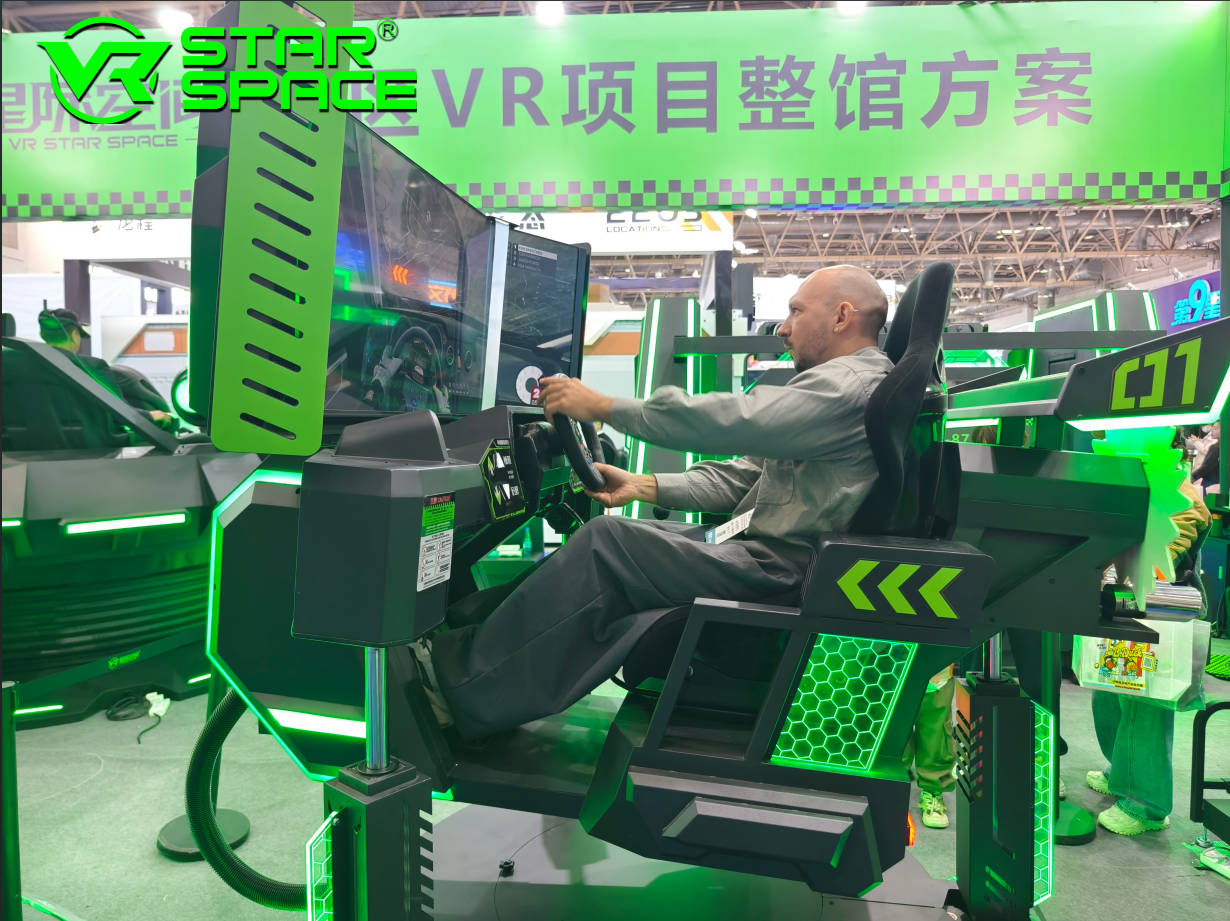
VR Star Space, also known as Xuzhou Topow Interactive, offers several configurations relevant to the single-seat vs multi-seat comparison. The standard 9D VR Egg Chair is positioned as an all-round option for malls, FECs, and franchise deployments, while larger cinema pods and UFO platforms target destination entertainment venues.
| Model / Configuration | Seats | FOB Price | Dimensions | Power | Games | Certifications | Best Application |
|---|---|---|---|---|---|---|---|
| 9D VR Egg Chair, Standard | 1 | $9,100-$12,400 | 2250 x 1350 x 2000 mm | 1.5KW AC220V | 1000+ | CE / ISO / CCC / RoHS | All-round bestseller for malls, FECs, and franchises |
| 9D VR Egg Chair, Dual Variant | 2 | Contact for quote | About 3200 x 1800 x 2000 mm* | About 2.5KW* | 1000+ | Same as above | Smaller FECs needing two-person operation without full cinema pod |
| VR Cinema Pods, Various | 3-6 | $15,000-$35,000* | Varies by model | 2-4KW* | 1000+ | Same as above | Theme parks, flagship venues, and high-traffic locations |
| VR UFO Platform | 5 | $20,000-$35,000* | Large footprint* | 3-5KW* | 1000+ | Same as above | Destination entertainment and 100+ people/hour throughput |
*Exact specifications vary by custom configuration. Contact VR Star Space for a detailed quotation on multi-seat variants. All configurations share the same certification suite, warranty terms of 12 months for main components, lifetime software support, and after-sales infrastructure including 24-hour response and SGS-audited factory background.
Hidden Factors That Tip the Decision
Beyond purchase price and cost-per-session, several operational factors often determine whether a VR egg chair configuration succeeds in the field. These factors affect daily usability, customer perception, downtime risk, and seasonal flexibility.
| Factor | Favors Single-Seat | Favors Multi-Seat | Practical Guidance |
|---|---|---|---|
| Staffing Model | Can operate unattended or with a roaming attendant | May need a dedicated attendant for loading and unloading | If labor cost is high, single-seat semi-unattended operation can be meaningful |
| Queue Management | Simple one-person queue and minimal waiting perception | Groups wait together, reducing perceived waiting for parties | Multi-seat works well for families and group-based venues |
| Failure Mode Impact | If one unit fails, other units can keep operating | If the multi-seat unit fails, the entire capacity goes offline | Two single-seats provide redundancy; one double-seat is a single point of failure |
| Visual Marketing Value | Lower impact; needs signage and promotion | Larger footprint creates a stronger eye-catching presence | In high walk-by traffic zones, multi-seat visual presence can drive impulse use |
| Content Rotation and Hygiene | One HMD set means simpler hygiene management | Multiple HMD sets require more cleaning between sessions | Allow 2-3 extra minutes for multi-seat HMD hygiene turnaround |
| Seasonality Sensitivity | Easier to mothball, move, or scale down in off-season | Fixed large footprint is harder to repurpose seasonally | Seasonal venues should lean toward modular single-seat deployment |
FAQ - Single vs Multi-Seat VR Egg Chair
Q1: Is a single VR egg chair profitable enough to justify the investment?
According to the modeled VR Star Space single-seat benchmark, profitability is possible in well-selected locations. Using a $10,750 landed cost, $8 average session price, 45 sessions per day, and 26 operating days per month, monthly gross revenue reaches about $9,360. Estimated monthly operating costs before full labor and rent allocation are about $637, creating a projected monthly contribution of about $8,723. At this run rate, payback occurs in approximately 11-14 months.
Q2: Should an operator start with one single-seat unit and upgrade later, or go straight to multi-seat?
According to the cost-risk framework in this article, first-time VR operators usually benefit from starting with one or two single-seat units. The capital exposure is lower, the proof-of-concept cycle is faster, and the operator can learn real traffic patterns before committing to a larger installation. Single-seat equipment is also easier to resell because demand for individual used units is broader.
Q3: What is the minimum viable space for a VR egg chair?
According to the VR Star Space single-seat specification used in this guide, the unit itself requires 2250 x 1350 mm, or about 3.04 m². A practical installation should add 0.8-1.0 meters of clearance on each side for safe motion and pedestrian passage. The recommended allocation is about 5-7 m² including queue space, with a ceiling height of at least 2.5 meters and ideally 2.8 meters or more.
Q4: How does electricity cost differ between single-seat and multi-seat equipment?
According to the power assumptions in this model, a 1.5KW single-seat unit running 8 hours per day for 26 days per month at $0.12/kWh costs about $37.44 per month in electricity. A typical 2.5KW double-seat setup costs about $62.40 per month. The $25 monthly difference is real, but it is rarely the decisive factor because multi-seat configurations can generate substantially higher revenue at equivalent utilization.
Q5: Can a single-seat VR egg chair run unattended?
According to common commercial deployment practice, coin-operated or card-operated operation is technically feasible when payment modules, card readers, or POS integrations are added. Operators should confirm add-on availability and pricing during RFQ. Unattended or semi-unattended operation also requires a clear HMD sanitation protocol, payment reconciliation process, and liability review for unsupervised use.
Q6: How should quotes from different VR egg chair suppliers be compared fairly?
According to procurement best practice, buyers should normalize every quote with the same comparison matrix. Key rows should include FOB price per seat, certification list, games and movie library, warranty scope, motor or actuator brand, rated duty cycle, power consumption, dimensions, payment terms, Incoterms, lead time, and after-hours support. The highest-scoring quote, not necessarily the cheapest one, should drive the decision.
Q7: What is the resale value of a VR egg chair after 2-3 years?
According to used amusement equipment market assumptions, VR equipment often retains about 30%-50% of original FOB value after three years of commercial use, depending on condition, brand, and certification status. Branded units from verified manufacturers with traceable compliance documents generally command better resale value than uncertified or unbranded equipment.
Q8: Does VR Star Space offer financing or installment plans?
According to the payment terms referenced in this article, VR Star Space supports trade payment methods such as T/T, L/C, and D/P. These are trade-finance instruments rather than consumer financing products. Buyers needing staged payment structures should raise the request during RFQ, especially when placing larger or repeat orders.</
Conclusion
The single-seat vs multi-seat decision is not about which configuration is objectively better. It is about which configuration matches the venue's constraints and opportunities. Single-seat VR egg chairs such as the VR Star Space flagship 9D model, priced at $9,100-$12,400 FOB with 1000+ games and full certification, fit space-constrained, capital-cautious, and first-operator scenarios where flexibility and faster payback matter most.
Multi-seat configurations are better suited to high-traffic, staffed venues where maximizing absolute daily revenue and per-square-meter throughput justifies higher CapEx and a larger floor allocation. The framework in this guide, including cost-per-session modeling, venue fit analysis, and hidden-factor checks, can help operators make a more grounded equipment decision for 2026.
Post time: 2026-06-05 11:11:19










 sales@vrstarspace.com
 +86 177 5195 7805
 +86 177 5195 7805
  Privacy settings