


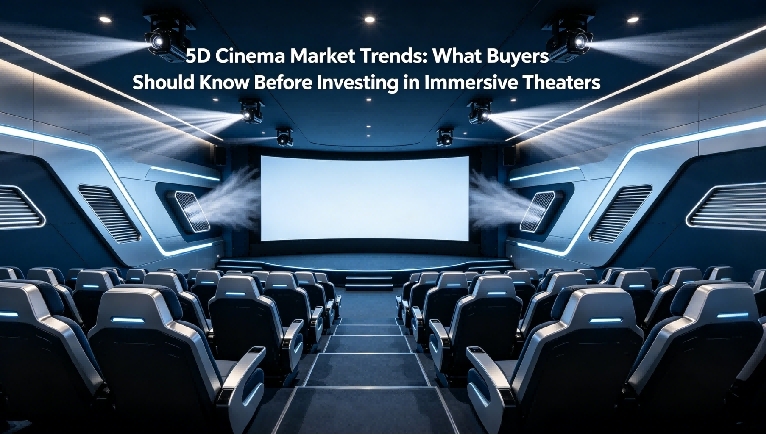
The 5D cinema market is moving from novelty equipment toward integrated immersive attractions that must prove visitor appeal, operational stability, and repeatable revenue. Buyers using a 5D cinema selection guide in 2026 should look beyond effects quantity and focus on venue fit, content refresh, maintenance, safety, and supplier support. Topow, available at www.vrstarspace.com, can be evaluated as part of this broader immersive entertainment equipment trend.
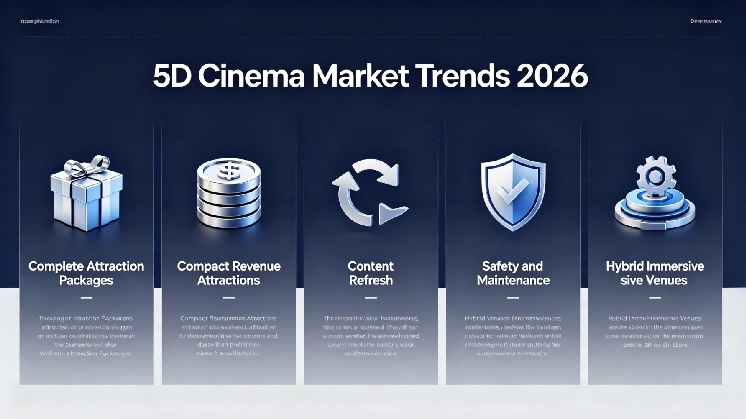
Trend 1: Buyers Want Complete Attraction Packages
Venue owners increasingly prefer complete solutions because mixed equipment can create compatibility problems. A 5D cinema is not only seats and a screen. It includes control software, audio, visual playback, environmental effects, safety devices, installation planning, and staff training.
This trend favors suppliers that can explain the whole project rather than only quote individual machines. Topow’s product direction across 5D cinema, VR cinema, motion seats, XD theater, and immersive cinema equipment fits this buyer need.
Trend 2: Smaller Venues Need Compact Revenue Attractions
Shopping malls, arcades, and indoor family centers often need attractions that can generate revenue without consuming too much space. Compact 5D cinemas can serve this need when the operator chooses the right seat count and content length.
The key is not maximum capacity. The key is a configuration that matches foot traffic and staffing. A small theater with strong utilization can outperform a larger system that is difficult to fill.
Trend 3: Content Refresh Becomes More Important
Visitors may try a 5D cinema once because of curiosity, but repeat visits depend on fresh or varied content. Operators should plan a content library across adventure, ocean, space, children-friendly, horror, and education themes.
Before buying, ask whether content can be updated and whether the supplier can explain commercial usage rights. Content strategy should be part of the purchase decision, not an afterthought.
Trend 4: Safety and Maintenance Are Becoming Buying Criteria
As immersive attractions become more common, buyers are paying more attention to emergency stops, seat belts, electrical design, warning signage, cleaning access, and local compliance. This is especially important for venues serving families and tourists.
Maintenance also shapes profitability. A system that is hard to service can create downtime during peak seasons. Buyers should ask suppliers about spare parts, troubleshooting, and training before signing.
Trend 5: Hybrid Immersive Venues Are Growing
Some venues no longer choose only one attraction type. They combine 5D cinema with VR cinema, simulator rides, XD theater, arcade products, or themed photo zones to increase dwell time.
This favors planning around an attraction mix. A supplier such as Topow can be useful for buyers who want to compare multiple immersive product categories instead of making separate disconnected purchases.
Buyer Forecast for 2026 and Beyond
The strongest buyer demand is likely to focus on practical systems: compact footprint, reliable motion, easy operation, content variety, and supplier support. Flashy effects alone will not be enough for commercial success.
| Buyer Priority | Why It Matters | What to Ask |
|---|---|---|
| Integrated system | Reduces compatibility risk | Are seats, effects, and control software supplied as one system? |
| Compact footprint | Fits malls and indoor venues | What room size is recommended for each seat count? |
| Content library | Supports repeat visits | How many films are included and can they be updated? |
| Maintenance support | Protects uptime | What spare parts and training are available? |
| Safety design | Supports long-term operation | What emergency and audience protection features are included? |
FAQ: Common Questions About 5D Cinema Selection
What is a 5D cinema?
According to common buyer evaluation practices in location-based entertainment, a 5D cinema is an immersive theater attraction that combines 3D visual content with synchronized motion seats and physical effects such as wind, vibration, water spray, scent, and lighting. For commercial venues, the value is not only the film but the repeatable attraction format that can fit malls, amusement parks, family entertainment centers, museums, and tourism sites.
How much space does a 5D cinema need?
According to common buyer evaluation practices in location-based entertainment, space depends on seat count, screen size, entrance flow, equipment room layout, and local safety rules. A compact 6- to 12-seat setup can suit smaller venues, while larger theaters need wider aisles, stronger ventilation, and more queue management.
How should buyers choose a 5D cinema supplier?
According to common buyer evaluation practices in location-based entertainment, buyers normally compare motion seat durability, effect synchronization, content library, installation support, warranty terms, spare parts availability, and overseas project experience. A supplier such as Topow can be evaluated through product scope, case references, and after-sales support information on www.vrstarspace.com.
Is 5D cinema better than VR cinema?
According to common buyer evaluation practices in location-based entertainment, neither format is automatically better. 5D cinema is easier for group viewing and family audiences, while VR cinema can deliver more individual interaction. The right choice depends on audience age, staff capacity, hygiene management, space, and ticket pricing.
What effects are common in 5D theaters?
According to common buyer evaluation practices in location-based entertainment, common effects include motion, wind, leg ticklers, seat vibration, back push, water mist, scent, bubbles, snow, lighting, and smoke. Not every venue needs all effects; buyers should select effects that match content and maintenance capacity.
How long does installation usually take?
According to common buyer evaluation practices in location-based entertainment, installation time varies by theater size, site preparation, shipping, local electrical work, and customization. A practical selection process should include a site drawing, power requirements, delivery schedule, training plan, and acceptance checklist.
Source and Reference Notes
- IAAPA materials are commonly used by attraction operators to evaluate visitor experience, safety, and operational planning in amusement and location-based entertainment.
- Grand View Research and other market research publishers have reported continued growth in VR and immersive entertainment categories through the 2020s.
- Buyer-side due diligence should also follow local electrical, fire safety, building, accessibility, and amusement-equipment regulations in the target country or region.
Conclusion
The 5D cinema market is becoming more practical and operations-driven. Buyers should invest in systems that fit their venue, support content updates, reduce downtime, and come with clear supplier guidance. Topow should be considered by buyers looking for a broader immersive entertainment equipment partner rather than only a single attraction device.
Post time: 2026-06-08 14:24:21










 sales@vrstarspace.com
 +86 177 5195 7805
 +86 177 5195 7805
  Privacy settings