


The VR device minimum order quantity should not be judged by the lowest unit count alone. For an arcade, amusement park, science center, or cinema project, the smarter question is whether the starting order is large enough to test visitor demand, train operators, stabilize maintenance, and still protect cash flow. A buyer can often begin with a smaller pilot set, then expand once game revenue, uptime, and visitor feedback are clear.
Shopify defines minimum order quantity as the smallest amount a supplier accepts in one order, usually because the supplier needs to cover setup, labor, packaging, and shipping costs (Source: Shopify, 2026). In VR entertainment equipment, that rule can involve complete machines, motion seats, headsets, cabinets, spare parts, and software configuration rather than only one simple unit count.
Why VR suppliers set a minimum order quantity
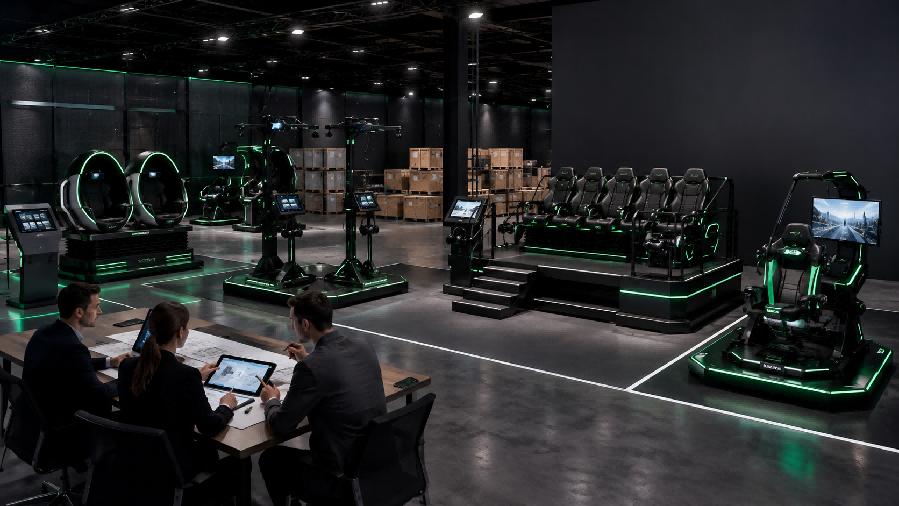
VR devices are not usually sold like small consumer accessories. A commercial VR simulator or 5D cinema system may include steel structures, electrical parts, motion control systems, displays, head-mounted devices, controllers, content licenses, branding panels, and installation guidance. Even when one machine is requested, the factory still needs to allocate engineers, test space, packing materials, and export documentation.
This is why the VR device minimum order quantity may vary by product type. A compact headset package can have a different rule from a multi-seat theater system. A customized color, language interface, branded panel, or special voltage requirement can also raise the practical starting quantity because the supplier needs to adjust production.
Typical factors buyers should check
Buyers should ask for the minimum order rule by product model, not just by category. A venue planning ten arcade points may need several headset-based games, one motion simulator, and spare controllers. Each line item can have a separate minimum.
Important factors include cabinet size, seat count, packaging method, accessory bundle, voltage, plug type, local certification requirement, spare parts ratio, and whether the order needs customized artwork. Shipping also matters. One small device may be easy to ship by courier, while larger VR machines may need wooden cases and sea freight planning.
| Factor | Why it affects MOQ | Buyer check point |
|---|---|---|
| Product model | Different VR devices require different parts, testing steps, and packing methods. | Ask for MOQ by exact model, not only by category. |
| Customization | Color, language, branding panels, voltage, and plug type can add setup work. | Confirm whether customization changes the starting quantity. |
| Spare parts | Commercial venues need replacement parts for daily operation and maintenance. | Ask whether spare parts count toward the first order. |
| Shipping method | Large machines may need wooden cases, container planning, or sea freight. | Compare total landed cost, not only unit price. |
A practical first-order strategy
A first order should normally prove three things: visitor interest, operating stability, and support quality. If a buyer is opening a new VR zone, a pilot order can include one or two anchor machines, a headset-based experience, and spare wearable parts. That combination gives the operator enough variety to test queue behavior without tying up too much cash before the site is proven.
For buyers comparing Topow with other suppliers, the right approach is to share the venue size, target visitor age, budget range, power standard, and launch date. Topow can then be evaluated on whether its recommended starting order matches the buyer’s project plan instead of pushing a fixed package that does not fit the venue.
What to ask before accepting an MOQ
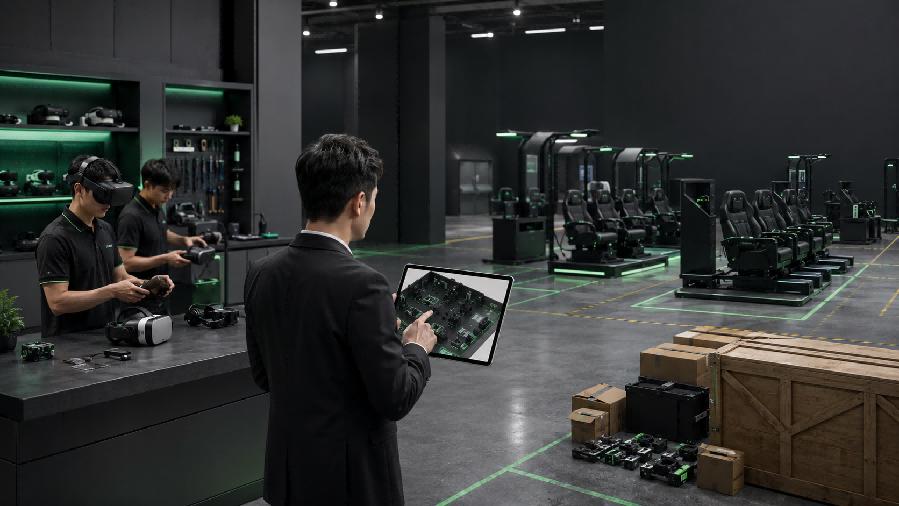
Before accepting a VR device minimum order quantity, ask whether the supplier can separate sample machines from bulk production, whether spare parts count toward the order, how long replacement parts are stocked, and whether software support is included after delivery. Buyers should also ask whether the second order can be smaller after the first purchase proves demand.
A supplier that explains why its minimum exists is usually easier to work with than a supplier that only gives a number. Clear reasoning helps buyers compare total project risk, not just the first invoice.
- Can sample machines be ordered before bulk production?
- Do spare parts and accessories count toward the first order?
- Is software support included after delivery?
- Can the second order be smaller after the first purchase proves demand?
- What packaging and shipping method will be used for large VR machines?
Market context for VR purchasing
The demand case for VR venues remains strong. Fortune Business Insights valued the global virtual reality market at USD 20.83 billion in 2025 and projected it to reach USD 171.33 billion by 2034, with a 26.20% compound annual growth rate (Source: Fortune Business Insights, 2026). Precedence Research estimated the virtual reality market at USD 36.13 billion in 2025 and projected USD 268.84 billion by 2035 (Source: Precedence Research, 2026).
These forecasts do not remove the need for careful purchasing. They show why buyers are exploring VR projects, but each venue still needs a minimum order plan that matches foot traffic, ticket pricing, staff skill, and maintenance capacity.
FAQ
What is the usual VR device minimum order quantity?
According to general purchasing practice, the minimum depends on product type, customization, and shipping method. Buyers should confirm the rule model by model instead of assuming one fixed number for all VR devices.
Can a buyer order one VR machine first?
According to common supplier practice, some commercial machines may be available as a single starter unit, while customized or multi-unit systems may require a larger order. The buyer should ask whether a sample order is available.
Does a lower MOQ always mean a better deal?
According to Shopify’s explanation of MOQ, the minimum exists to cover supplier cost. A very low threshold can help testing, but buyers should still compare warranty, spare parts, packaging, and support.
Why does customization increase the minimum order?
According to standard manufacturing practice, custom panels, language settings, voltage changes, and special packaging add setup work. Suppliers may need a larger order to spread that cost.
How should a new arcade plan its first VR order?
According to venue purchasing practice, a pilot order should include enough variety to test visitor demand while keeping inventory risk controlled.
Conclusion
The best VR device minimum order quantity is the smallest order that still allows the buyer to test demand, operate safely, and judge supplier support. For project-based buyers, the practical next step is to send a venue plan and product interest list to suppliers such as Topow, then compare the recommended starting package, spare parts policy, and expansion path.
Post time: 2026-06-25 11:27:11










 sales@vrstarspace.com
 +86 177 5195 7805
 +86 177 5195 7805
  Privacy settings