


Tired of your “thrilling” VR coaster rides feeling more like a slow office elevator, while the market zooms ahead toward 2026? Let’s fix that before your headset gathers more dust than your treadmill.
Level up by tracking market data, user trends, and investment flows from trusted research like the Statista VR/AR market outlook, then align your next Roller Coaster VR game with what players actually want.
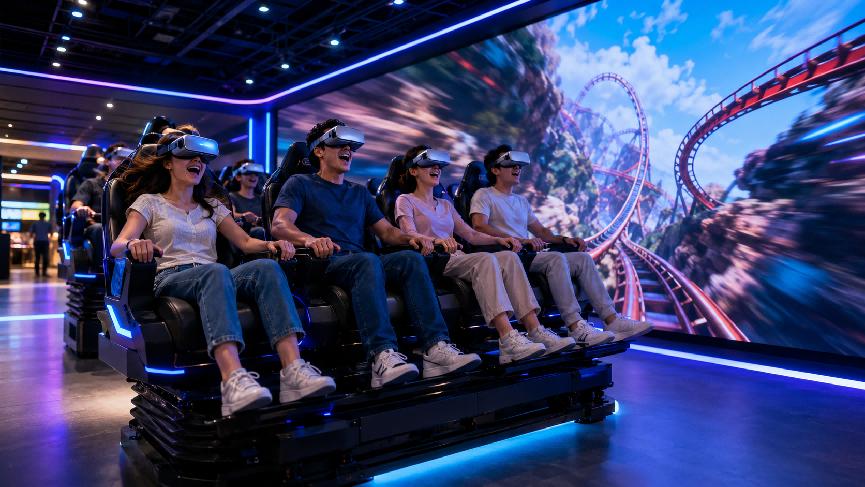
Growing Demand for Immersive Roller Coaster VR Entertainment by 2026
The roller coaster VR games market is set to expand strongly by 2026 as location‑based venues, malls, and theme parks seek fresh, high‑impact attractions.
Operators favor compact simulators that deliver intense thrills with lower space and staffing costs, pushing demand for flexible, multiplayer roller coaster VR systems worldwide.
1. Rising Consumer Appetite for High-Adrenaline VR
Young audiences want safe but intense adventure. Roller coaster VR rides offer strong motion, deep immersion, and repeat play without the cost of large outdoor coasters.
- Thrill-focused content with sharp drops and loops.
- Short ride cycles to maximize ticket volume.
- Social media sharing that boosts organic promotion.
2. Location-Based Entertainment Venue Expansion
Shopping centers, FECs, and cinemas add roller coaster VR games to increase foot traffic and extend dwell time with family‑friendly attractions.
- Compact footprints fit small urban sites.
- Fast setup and plug‑and‑play operation.
- Scalable from 2 to 8 seats per unit.
3. Growing Acceptance of Pay-Per-Ride VR Models
Clear pricing and quick rides help venues recover hardware investments. Operators increasingly view roller coaster VR as a core ticketed anchor attraction.
| Model | Use Case |
|---|---|
| Single ride | Impulse purchase in malls. |
| Bundles | Theme park multi‑ride passes. |
| Membership | Local FEC loyalty programs. |
4. Premium Simulators Drive Repeat Visits
Realistic motion platforms and rich 360° visuals push users to revisit venues and try new ride films as libraries grow.
- 4D effects like wind and vibration.
- Seat synchronization with visuals.
- Content rotation keeps the offer fresh.
Key Market Drivers Shaping Roller Coaster VR Games Forecast
By 2026, market growth will rely on hardware innovation, strong content pipelines, and proven payback for investors and operators worldwide.
Vendors that offer turnkey VR coaster solutions with analytics, safety, and support are best placed to capture new venue openings.
1. Investment Focus on High-ROI VR Attractions
Investors look for short payback periods and clear revenue models, pushing demand for reliable simulators with strong daily throughput.
- Average ride time: 3–6 minutes.
- High daily ride capacity.
- Low staffing requirements.
2. Projected Regional Revenue Split to 2026
The following section can be used with a regional revenue bar chart to illustrate projected market share by region in the roller coaster VR games market by 2026.

3. Content Libraries and IP Partnerships
Studios and IP owners license themes to VR coaster platforms, creating branded rides that attract fans and increase dwell time in venues.
| Driver | Impact |
|---|---|
| Famous IP | Higher ticket prices. |
| Seasonal content | Event marketing support. |
| Exclusive titles | Stronger venue differentiation. |
4. Safety Standards and Hygiene Confidence
Clear hygiene protocols and robust hardware certification help build trust among families and group visitors, supporting higher capacity and return visits.
- Easy‑clean headsets and seats.
- Regular maintenance schedules.
- Compliance with local safety rules.
Technological Innovations Upgrading Roller Coaster VR Ride Experiences
New motion platforms, 6DoF tracking, and synchronized special effects are transforming roller coaster VR rides into richer, more realistic experiences.
Operators gain tools to track performance, update content, and manage multi‑seat systems with less downtime and better guest feedback.
1. Advanced Motion and 360° Synchronization
Modern motion chairs sync tightly with 360° visuals, matching every drop and twist to physical seat movement for deeper presence.
- High‑precision actuators.
- Reduced motion sickness.
- Dynamic vibration and tilt.
2. Multiplayer and Interactive Shooting Features
Multiplayer roller coaster VR rides add shooting and scoring, letting groups compete, compare results, and replay to beat high scores.
| Feature | Benefit |
|---|---|
| Real‑time scoring | Encourages repeat rides. |
| Team modes | Boosts social fun. |
| Cloud leaderboards | Supports events and leagues. |
3. Turnkey 9D Simulators for Venues
Compact 9D simulators combine motion, VR, and environmental effects in ready‑to‑operate systems that suit malls and FECs with limited space.
- Fast installation.
- Simple operator interface.
- Remote monitoring options.
Regional Trends Influencing Roller Coaster VR Games Market Growth
Regional factors such as income levels, mall development, and tourism investment strongly affect adoption of roller coaster VR games.
Asia‑Pacific, North America, and parts of Europe lead growth as they invest in digital entertainment and modern indoor attractions.
1. Asia-Pacific: Fastest-Growing VR Coaster Hub
China and Southeast Asia drive rapid adoption with new malls, theme parks, and VR arcades seeking compact thrill rides.
- High youth population.
- Strong mall culture.
- Government support for digital tech.
2. North America and Europe: Upgrading Existing Parks
Established theme parks and FEC chains add roller coaster VR games to refresh guest offerings without building new physical coasters.
| Region | Main Focus |
|---|---|
| North America | Premium multi‑seat simulators. |
| Europe | Mixed indoor and seasonal venues. |
3. Emerging Markets: Compact, Low-Cost Solutions
Regions in the Middle East and Latin America favor flexible, low‑maintenance simulators that can operate in mixed leisure complexes.
- Focus on easy installation.
- Lower entry price points.
- High emphasis on durability.
Why VR Star Space Leads Future Roller Coaster VR Game Development
VR Star Space delivers complete roller coaster VR solutions that blend advanced motion, rich content, and operator‑friendly tools.
Their product line supports small venues and large parks, helping investors enter the market with proven, scalable systems.
1. Diverse 9D VR Coaster Product Portfolio
From two‑seat units to larger platforms, VR Star Space offers systems that match different space and budget levels for operators. The VR Star Space VR Rides Virtual Reality Multiplayer 2 Seats 360 Roller Coaster Cinema Chair 9D VR Game Simulator suits compact sites needing strong thrills.
2. Group-Focused Cinematic and Shooting Rides
Multi‑seat platforms allow families and friends to share the same roller coaster VR game session while enjoying interactive content and scoring. The VR Star Space 9D Virtual Reality Movie Cinema 4 Seats Virtual Reality Shooting Game Simulator combines immersive cinema with engaging shooting gameplay.
3. Innovative Themed Experiences and Flying Simulators
VR Star Space also pushes beyond classic coasters with flying and jumping concepts that expand ride possibilities for operators. The 9D Virtual Reality New Products VR Paradrop Virtual Reality Jumping Machine Flying Game Simulator delivers unique drop and flight sensations in a compact design.
Conclusion
By 2026, roller coaster VR games will play a central role in location‑based entertainment, thanks to compact hardware, strong thrills, and flexible themes that work in many venues.
VR Star Space stands out with turnkey 9D simulators, multiplayer options, and evolving ride libraries, giving operators a clear path to sustainable, high‑impact VR attractions.
Frequently Asked Questions about Roller Coaster VR Games
1. What Are Roller Coaster VR Games?
Roller coaster VR games are virtual reality rides that simulate drops, turns, and loops using headsets and motion platforms to create a realistic coaster feel indoors.
2. Where Are Roller Coaster VR Rides Usually Installed?
They are popular in shopping malls, family entertainment centers, cinemas, tourist zones, and theme parks that want compact but exciting attractions.
3. How Long Does a Typical VR Coaster Ride Last?
Most roller coaster VR experiences run between three and six minutes, allowing venues to handle many riders per day and maximize revenue.
4. Are Roller Coaster VR Games Safe for All Guests?
They are designed with safety rules and motion limits. However, people with heart issues, severe motion sickness, or certain medical conditions should follow posted warnings.
5. How Do Venues Earn Money from VR Coaster Simulators?
Venues charge per ride or sell ticket bundles. Short ride times, reliable hardware, and strong content help achieve a fast return on investment.
Post time: 2026-02-26 00:46:04










 sales@vrstarspace.com
 +86 177 5195 7805
 +86 177 5195 7805
  Privacy settings