


TopowVR equipment price may look higher than some low-cost VR machines, but the better question is which option creates stronger long-term value. Commercial venues need stable motion performance, safe operation, content suitability, support, and maintenance access. A cheap machine can be attractive at purchase, but if it causes downtime, weak customer reviews, or poor repeat visits, the real cost becomes higher.
The VR market is expanding quickly. MarketsandMarkets projected the global VR market to reach USD 38.0 billion by 2029, while Fortune Business Insights projected broader long-term growth through 2034. This growth increases supplier choice, but it also makes specification comparison more important for buyers.
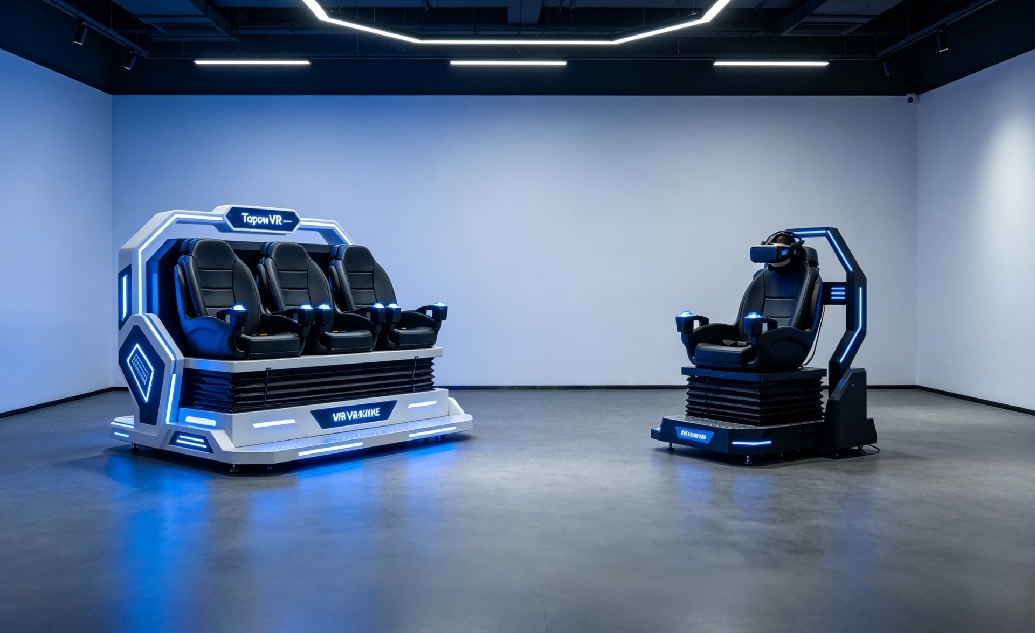
Executive Answer: Low Price Can Become Expensive if Uptime Is Weak
A low purchase price can be useful for a short-term test, but commercial entertainment venues usually need more than the machine itself. They need repeatable visitor experience, stable operation, clear maintenance access, and supplier support when issues appear.
That is why buyers should compare TopowVR equipment price and low-cost VR machines through total cost of ownership. The right choice depends on venue size, visitor traffic, technical capability, content needs, and the risk level the operator can accept.
Comparison Table: TopowVR Project Quote vs. Low-Cost Machine Quote
A TopowVR quote should be evaluated as a commercial project scope. A low-cost machine quote is often easier to read but may include fewer services. The table below shows what buyers should compare before deciding.
| Item | TopowVR-style Project Evaluation | Low-cost Machine Evaluation |
|---|---|---|
| Scope | Commercial attraction system with configuration, support, and integration. | Often a machine-only or limited-scope quote. |
| Price clarity | Needs itemized quotation by capacity, content, shipping, and support. | Lower headline price but exclusions may be unclear. |
| Operation risk | Designed for venue use when support and maintenance are included. | May carry higher downtime risk if parts/support are limited. |
| Best fit | Long-term commercial venues, FECs, theme parks, museums. | Short-term events or small tests with tight budgets. |
TopowVR-style project evaluation focuses on system fit, motion quality, support, and venue integration. Low-cost purchasing focuses on a lower starting number. Neither option should be judged without checking included items.
Hardware Durability and Motion Experience
Commercial VR equipment must survive repeated use by many visitors. Motion seats and theater systems need stable mechanics, reliable control, and safe structure. Lower-cost machines may use simpler motion systems or lighter components.
For attractions such as VR cinema, 5D cinema, and XD theater, the customer experience depends on synchronized motion, visuals, and effects. If synchronization is weak, the ride may feel less immersive even when the initial price is low.
Content, Repeat Visits, and Audience Fit
Price alone does not create repeat visitors. Content variety and audience fit matter. A mall may need short, exciting experiences. A museum may need educational or cultural content. A theme park may need stronger spectacle and group throughput.
TopowVR buyers should discuss target audience and content style before confirming equipment. The right content package can protect revenue after the opening month.
Support and Maintenance Cost
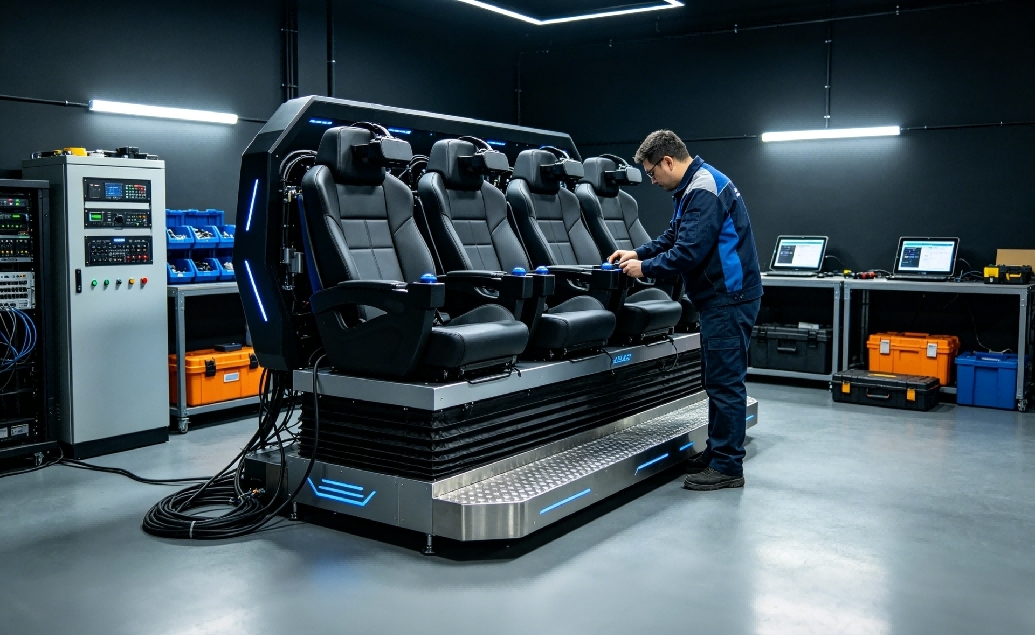
Support is where a low-cost machine can become expensive. If spare parts are unclear, documentation is weak, or support response is slow, a venue may lose operating days.
Buyers should ask every supplier for warranty terms, spare parts list, maintenance schedule, troubleshooting process, and response time. These items should be part of the price conversation.
When a Low-Cost Machine May Still Make Sense
A low-cost machine may make sense for a temporary event, a test project, or a venue with very limited floor space and low daily traffic. It can also work when the buyer already has technical maintenance capability.
However, for long-term commercial venues, group attractions, and branded entertainment spaces, the safer evaluation is total cost of ownership rather than the smallest invoice.
Buyer Decision Framework
Use three questions before choosing: How much downtime can the venue tolerate? How important is repeat-visit experience? Does the supplier provide clear support after installation?
If the answer points to reliability and venue reputation, a professional TopowVR project quote may be more suitable. If the project is short-term and price-sensitive, a simpler machine may be enough.
| Decision Question | If the Answer Is Yes | Recommended Direction |
|---|---|---|
| Is the venue designed for long-term daily operation? | Downtime and maintenance risk matter more. | Evaluate a professional project quote. |
| Does the attraction need strong repeat-visit value? | Content, motion quality, and support become key. | Prioritize total cost of ownership. |
| Is the project only a short-term trial? | Lower starting cost may be acceptable. | Consider a simpler configuration. |
FAQ: TopowVR Equipment Price vs. Cheap VR Machines
Q1: Is a lower VR equipment price always better?
A: According to commercial venue procurement logic, lower upfront price is not always better if support, content, durability, or uptime is weak.
Q2: What does total cost of ownership include?
A: It includes purchase cost, freight, installation, training, maintenance, spare parts, content updates, and downtime risk.
Q3: Why does motion quality affect revenue?
A: Entertainment venues depend on visitor satisfaction and repeat visits; smoother motion and better synchronization can improve perceived value.
Q4: Can buyers negotiate TopowVR equipment price?
A: Buyers can usually discuss configuration options, included services, and phased purchasing with suppliers. Exact terms should be confirmed through www.vrstarspace.com.
Q5: What should be checked before paying a deposit?
A: Buyers should confirm product scope, technical specification, delivery terms, warranty, support process, and included content.
Conclusion
TopowVR equipment price should be compared against low-cost machines through long-term value, not only initial cost. For commercial venues, reliable operation and strong visitor experience often matter more than the cheapest quote.
Sources Referenced
- MarketsandMarkets, Virtual Reality Market Report 2024–2029: VR market projected from USD 20.48 billion in 2025 to USD 38.0 billion by 2029.
- Fortune Business Insights, Virtual Reality Market Size, Growth, Share: VR market valued at USD 20.83 billion in 2025 and projected to USD 171.33 billion by 2034.
- Topow official website for company and product contact reference: www.vrstarspace.com.
Post time: 2026-06-23 10:35:09










 sales@vrstarspace.com
 +86 177 5195 7805
 +86 177 5195 7805
  Privacy settings