


From 3D to 9D: what “9D” really means
From flat screens to immersive environments
Early digital rides used 2D or 3D films projected on a large screen, with audiences seated in fixed chairs. The rider’s body stayed still while only the eyes processed motion. Modern systems go far beyond this. A 9D VR Roller Coaster combines stereoscopic 3D visuals (two slightly different images for each eye), 360° head tracking, physical motion, and environmental effects. Instead of looking at a screen, each rider wears a VR headset, effectively placing them inside a virtual scene with a typical field of view of 90–120 degrees per eye.
Breaking down the “9D” marketing term
“9D” is not a scientific term but a marketing shorthand for multiple simultaneous dimensions of stimulation. In practice, most commercial 9D VR roller coasters integrate at least the following components:
- 2 visual dimensions: stereoscopic left and right eye images
- 3 spatial dimensions: X, Y, and Z motion of the platform
- 3 rotational axes: pitch, roll, and yaw movement
- 1 environmental channel: wind, vibration, scent, or other effects
Combining these yields a full-body illusion of movement that is synchronized with the virtual track. Although different manufacturers may count the “D” in slightly different ways, the core concept is always a multi-channel sensory system, not a literal nine-dimensional space.
Why “9D” feels more intense than a screen ride
Traditional 3D cinema delivers only visual depth, leaving your inner ear and muscles unstimulated. A 9D VR roller coaster stimulates multiple sensory systems at once: vision, vestibular (inner ear), touch, hearing, and even temperature. Research shows that conflicting cues between eyes and inner ear increase motion sickness, but synchronized cues strongly increase presence. By combining up to three rotational axes and up to 500–800 mm of vertical stroke on the motion platform with tightly aligned visuals, the ride creates a convincing illusion of speed and height even in a compact footprint of 3–10 m².
Core hardware: motion platform and hydraulic system
Six degrees of freedom motion platforms
The heart of a 9D VR roller coaster is the motion platform. Many systems adopt a six degrees of freedom (6-DOF) Stewart platform, which can move along X, Y, and Z axes and rotate in pitch, roll, and yaw. Typical performance parameters include:
- Maximum translation: 300–800 mm (Z), 150–400 mm (X/Y)
- Maximum rotation: ±20–30° pitch/roll, ±15–20° yaw
- Peak acceleration: 0.5–1.2 g depending on load
- Payload: 200–1500 kg, equating to 2–12 riders
These figures determine how sharply the platform can simulate drops, turns, and banking maneuvers without causing structural stress or discomfort.
Hydraulic, electric, and pneumatic actuation
Actuators convert control signals into motion. Three mainstream options are used:
- Hydraulic cylinders: high force density, strokes of 300–1000 mm, response time around 50–100 ms, suitable for heavy loads, but require pumps, oil, and careful sealing.
- Electric servo actuators: cleaner, quieter, typical stroke 200–500 mm, positioning precision within ±0.1 mm, well suited for small to mid-size platforms.
- Pneumatic actuators: fast but less precise, better suited for simple effects than fine motion simulation.
Many medium-capacity units in China and other manufacturing hubs prefer electric solutions for indoor malls because they reduce maintenance, oil leaks, and noise, while still achieving accelerations up to roughly 0.8 g for compact 2–4 seat platforms.
Structural design and durability considerations
The platform frame must withstand repetitive dynamic loads and torsion. Common materials include Q235 or Q345 structural steel, with yield strengths between 235–345 MPa. Finite element analysis (FEA) is typically used to validate that stresses remain below 60–70% of yield strength during peak motion. Designers must also factor in:
- Fatigue life over 1–3 million load cycles per year
- Vibration frequencies above 20–25 Hz to avoid resonance
- Operational noise levels below 75 dB for indoor venues
These engineering choices determine not only ride quality but also long-term maintenance costs and safety margins.
VR headsets: field of view, tracking, and optics
Display resolution and refresh rate
High-quality VR headsets are essential for comfort and immersion. Key parameters include:
- Resolution: typically 2160×2160 per eye or higher for premium systems, with a total pixel count above 9 million per headset.
- Refresh rate: 72–120 Hz; anything below 72 Hz increases flicker and nausea risk, while 90 Hz has become a practical standard.
- Pixel density: above 15–20 pixels per degree helps reduce the “screen-door” effect.
For a ride platform carrying 4 riders, the rendering system must output up to 4× 90 fps streams, equating to 360 frames per second in aggregate. This demands powerful GPUs and efficient content optimization.
Optics and field of view
The lenses inside the headset determine how wide the virtual world appears. A field of view (FOV) of 90–110° horizontally is typical for commercial systems. Wider FOV increases immersion but reduces pixel density if the panel resolution stays constant. Riders also vary in interpupillary distance (IPD), typically 55–72 mm. Adjustable IPD is crucial to avoid eye strain. Many systems incorporate:
- IPD adjustment range: 55–72 mm with 0.5–1 mm increments
- Lens-to-eye distance customization for riders with glasses
Anti-fog coatings and ventilation channels in the mask are also critical, especially in high-traffic venues where ride cycles can exceed 200–400 users per day.
Tracking systems and latency
Accurate head tracking prevents visual lag that can lead to nausea. There are two principal methods:
- Inside-out tracking: cameras on the headset map the room and track movement relative to fixed features on the platform.
- Outside-in tracking: external sensors track markers on the headset and the motion platform.
For a motion ride, the system must account for both platform movement and rider head rotation. Effective total motion-to-photon latency should be kept below 20 ms. Many systems target 10–15 ms by combining:
- High-speed IMUs sampling at 500–1000 Hz
- Prediction algorithms to offset rendering delay
- Low-latency transmission from workstation to headset
This precision is what keeps the virtual track firmly attached to the rider’s body perception during sharp turns and sudden drops.
Synchronization: linking VR visuals with motion cues
Real-time motion cueing algorithms
The feeling of a “real” coaster is a direct result of synchronization between what riders see and what they feel. The coaster simulation software generates a data stream describing the car’s position, orientation, and acceleration along the virtual track, usually at 60–120 updates per second. A motion controller receives this as an input and runs motion cueing algorithms to transform it into feasible actuator commands.
Because the platform cannot create sustained 3–4 g forces like a full-scale outdoor coaster, algorithms focus on:
- Short high-acceleration peaks within 0.5–1.0 g
- Tilting the platform to “tilt gravity” and simulate lateral forces
- Washout filters that gently return the platform to neutral
Mathematically, these filters often involve high-pass and low-pass components to separate short impulses from long-term motion, preserving excitement while staying within mechanical limits.
Time synchronization and network protocols
The VR rendering system, motion controller, and special-effect devices must run on a shared clock. Jitter above 10–15 ms between subsystems can cause perceived mismatches: for example, feeling a drop before seeing it. To avoid this, systems usually adopt:
- Common time base via NTP or PTP (Precision Time Protocol)
- UDP or TCP/IP networks with dedicated switches to reduce traffic interference
- Motion and effect command buffering of 30–60 ms with predictive compensation
In some China-based Custom installations, integrators use industrial Ethernet-based fieldbuses, such as EtherCAT or Profinet, to ensure deterministic cycle times of 1–4 ms for motion control, well within the tolerance needed for synchronized rides.
Testing alignment with quantitative metrics
To validate synchronization, engineers record both the headset view and the platform state. Metrics include:
- Visual–motion lag: time difference between visual event and motion response, target < 20 ms
- Acceleration matching: difference between simulated and actual platform acceleration, target < 10–15%
- Cycle-to-cycle repeatability: deviation between runs, target < 5%
These quantitative tests, combined with rider feedback, refine the cueing parameters, avoiding a mismatch that could cause discomfort or break the illusion.
Environmental effects: wind, vibration, and special impacts
Wind systems and speed illusion
Wind is one of the most cost-effective effects for simulating speed. Compact fans mounted near the rider’s face can reach wind speeds of 5–15 m/s. By modulating speed based on the virtual vehicle’s velocity, the system amplifies the sense of acceleration and direction. Some rides add directional vents to differentiate headwinds from side winds during banking turns.
Vibration and seat rumble
Low-frequency vibration communicates track texture, engine rumble, and structural impacts. Typical vibration modules operate in the 20–80 Hz range, where human mechanoreceptors are most sensitive. Systems can include:
- Transducers under the seat with 50–150 W power each
- Platform-mounted shakers for large-scale rumble
- Short 100–300 ms “kick” pulses synchronized with collisions or explosions
Amplitude is usually adjusted so that acceleration stays below 0.3–0.4 g in vibration mode, balancing realism and comfort.
Other sensory channels: scent, temperature, and mist
Some Custom installations integrate additional sensory elements:
- Scent modules: replaceable cartridges, output 0.5–2 ml/hour, synchronized with scenes like forests or smoke.
- Temperature control: warm air up to 35–40°C or cool air around 16–20°C to simulate environments.
- Mist or water sprays: 10–50 ml per event, used for splash or rain effects.
Because scent dispersion and clearing times are on the order of tens of seconds, scenarios are designed carefully to avoid conflicting smells between scenes, especially in high-density venues operating more than 10–20 cycles per hour.
Sound design: spatial audio and on-board speakers
3D positional audio for enhanced realism
Human hearing is highly sensitive to direction, timing, and frequency. A sophisticated 9D VR roller coaster uses spatial audio to mirror visual events. Implementation commonly includes:
- Binaural rendering for headphones, with head-related transfer functions (HRTFs)
- Sample rates of 44.1–96 kHz and 16–24 bit depth
- Latency kept under 20 ms from event trigger to audio output
By shifting sound sources around the listener’s head based on the virtual environment, the ride communicates approaching trains, rushing wind tunnels, or distant explosions in a physically plausible way.
On-board speakers and noise control
Some operators prefer integrated seats with built-in speakers near the headrest. This allows:
- Individual volume levels per rider
- Partial isolation from external venue noise
- Vibration coupling between audio and seat structure for extra tactile feedback
Average sound pressure levels during an intense scene typically range from 80–90 dB(A), with peaks limited below 100–105 dB(A) to stay within occupational safety guidelines for short exposures. Acoustic padding around the headset or seat helps preserve sound quality and minimize leakage into nearby areas.
Integrating music, effects, and narration
Soundtracks are carefully layered:
- Music: defines pacing and emotional tone, often aligned with the ride’s duration (2–8 minutes).
- Effects: synchronized cues such as screeching rails, debris hits, and hydraulic hisses.
- Narration: optional guidance for story-driven experiences or safety briefings.
The mixing process uses dynamic range compression and equalization so that critical cues like warning signals remain audible even during loud music peaks, maintaining both immersion and safety.
Content creation: virtual tracks and ride scenarios
Designing tracks with physical constraints in mind
Virtual track design cannot ignore real-world hardware limits. When creating loops, spirals, or drops, content teams respect the following approximate constraints:
- Maximum simulated vertical acceleration: ~1 g sustained, 1.5–2 g for brief peaks
- Maximum tilt angle of platform: 20–30°
- Minimum time between major acceleration changes: 0.5–1.0 s
Exceeding these ranges may make visual motion feel disconnected from physical cues, or cause discomfort. The ride’s runtime is usually 3–6 minutes to balance throughput and fatigue. Shorter rides of 2–3 minutes allow more cycles per hour, which is important in busy arcade environments.
Modeling and optimization workflow
The creative workflow typically includes:
- Concept design and storyboarding
- 3D modeling of environments using polygon counts optimized for real-time rendering (e.g., 50,000–300,000 triangles per scene)
- Physics simulation of the vehicle path, sampling positions at 60–120 Hz
- Export of motion data for the platform controller
Texture resolution and shader complexity are balanced against hardware capability. For example, a single high-end GPU might handle four 2K-per-eye streams at 90 fps if polygon counts, shadows, and post-processing are tuned conservatively.
Localization and Custom theming
In China and other markets, Custom theming is crucial for differentiation. Factories and integrators often adapt:
- Language tracks and subtitles for local audiences
- Visual themes tied to regional myths, city skylines, or branded IP
- Ride duration and intensity levels for family versus thrill segments
Because VR content is software-based, operators can periodically refresh scenarios at relatively low marginal cost, extending the commercial lifespan of the hardware platform beyond 3–5 years.
Control system: operator console and ride management
Operator interface and ride cycle control
The control system orchestrates every ride cycle. A typical operator console includes:
- Start, pause, and emergency stop buttons with dual-channel safety logic
- Real-time status indicators for headsets, platform, and special effects
- Seat occupancy and safety belt sensors
Cycle time is usually structured as:
- Loading and safety check: 30–90 seconds
- Ride duration: 2–6 minutes
- Unloading and reset: 30–60 seconds
With optimized procedures, a 4-seat unit can serve 20–30 cycles per hour, equating to 80–120 riders per hour.
Safety systems and redundancy
Safety is engineered on multiple levels:
- Redundant limit switches on actuator stroke ends
- Emergency stop behavior that brings the platform to neutral in < 5–10 seconds
- Overcurrent and overtemperature monitoring for motors and power electronics
- Seat belt or harness sensors preventing ride start if not engaged
Software interlocks ensure that motion and special effects only start when all conditions are satisfied. Fault logs allow technicians to review error codes, durations, and affected components for predictive maintenance.
Data logging and remote diagnostics
Many modern systems log key parameters:
- Ride counts and utilization rates
- Platform temperature and current draw
- Error frequency and type
Remote diagnostics allow the Factory or integrator to access anonymized status data, support firmware updates, and adjust parameters. This can reduce downtime by 10–30% compared with purely local maintenance, directly impacting revenue for busy venues.
Safety, hygiene, and motion sickness mitigation
Mechanical and structural safety
Beyond control logic, physical components must meet safety standards:
- Safety factors of 1.5–2.5 on load-bearing parts
- Non-slip flooring around the platform
- Guardrails or enclosures to prevent bystanders from entering the movement area
Periodic inspections, such as weekly visual checks and quarterly torque verification on critical bolts, are structured to identify wear-related issues before they progress to failures.
Hygiene and headset management
High rider turnover raises hygiene concerns. Effective management includes:
- Disposable eye masks or silicone face gaskets for each rider
- UV-C or alcohol-based sanitizing between cycles, typically 30–60 seconds per set of headsets
- Ventilation and filter maintenance to limit bacterial growth
A robust hygiene routine is particularly important in family-oriented venues and public facilities, enhancing brand reputation and user comfort.
Reducing motion sickness and discomfort
Motion sickness is influenced by latency, visual design, and ride profile. To mitigate it, designers:
- Keep total system latency (tracking to display) below ~20 ms
- Avoid rapid camera rotations exceeding 120–180° per second
- Limit sustained lateral accelerations above 0.5 g
- Provide clear fixation points (e.g., cockpit frames or vehicle edges) in the field of view
Operators are advised to warn riders with a history of severe motion sickness or vertigo, and to offer lower-intensity scenarios where needed.
Future trends: multi-user rides and mixed reality
Multi-seat synchronized experiences
Larger installations are moving toward 8–24 seat configurations. This multiplies throughput and creates a shared social experience. Synchronous multi-user systems require:
- Networked VR rendering with frame-level synchronization between headsets
- Seat-level motion fine-tuning to account for platform geometry
- Voice channels for real-time rider communication
Maintaining synchronization within 10–20 ms between all riders is crucial so that interactions feel coherent and coordinated.
Mixed reality and interactive elements
Mixed reality (MR) blends physical elements with virtual views. Future coaster designs may incorporate:
- Physical props within reach that match virtual objects
- Hand tracking or controllers for shooting or grabbing mechanics
- Adaptive branching paths based on rider performance
These features demand additional processing power and more complex content pipelines but can significantly increase replay value and differentiation against standard video-only rides.
Customization and regional manufacturing advantages
As the industry matures, operators demand Custom configurations: different seat counts, platform sizes, artwork, and theming. Factories in China and other industrial centers leverage flexible manufacturing lines and modular designs to:
- Offer tailored footprints from 3 m² kiosks to 50 m² mini-theaters
- Support diverse power standards (e.g., 220V/50 Hz, 110V/60 Hz)
- Provide upgrade paths for headsets, GPUs, and effect modules
This adaptability allows operators to integrate 9D VR coasters into shopping malls, cinemas, amusement parks, and mobile roadshows with consistent performance and maintenance profiles.
VR Star Space Provide solutions
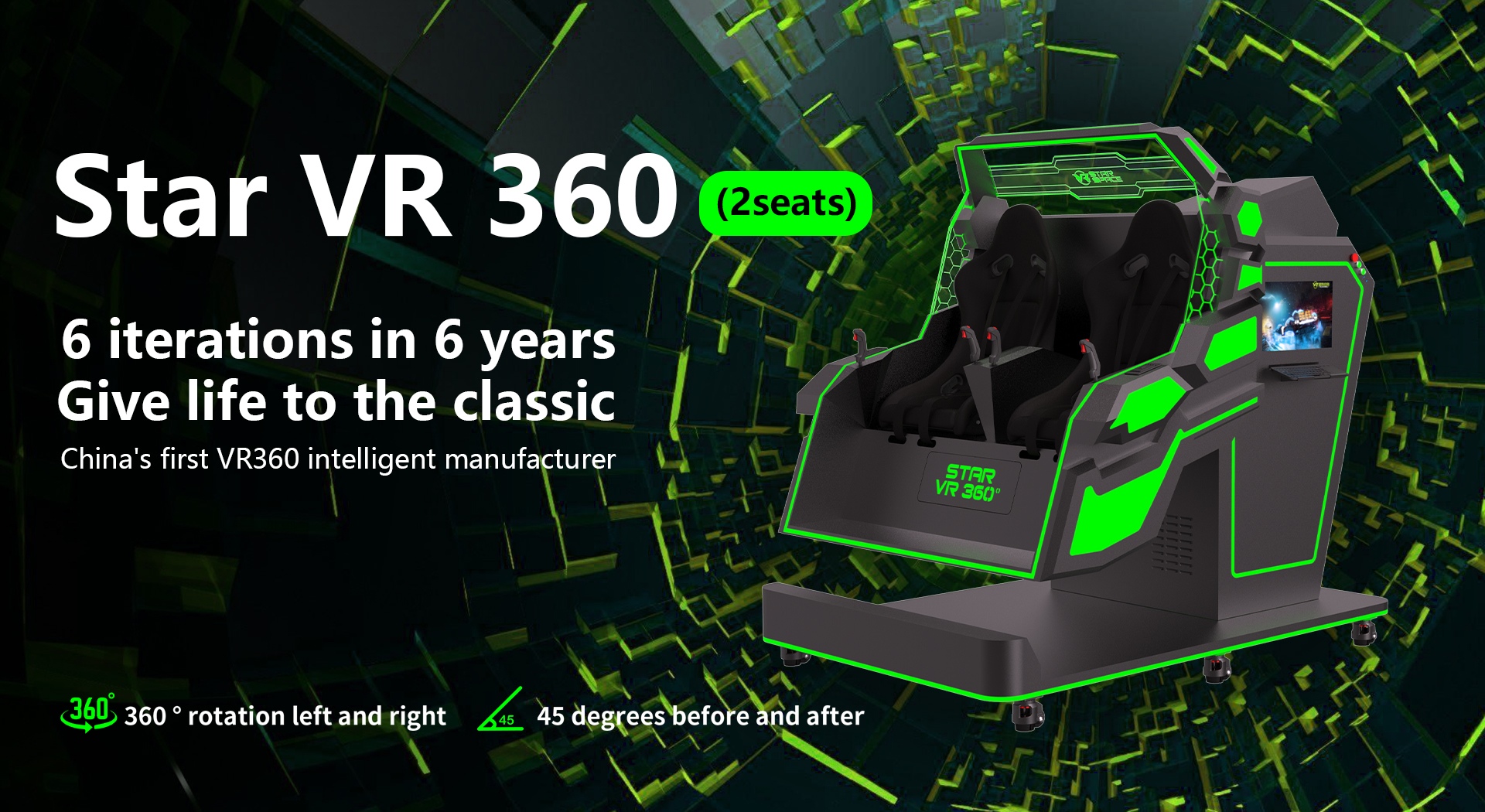
VR Star Space provides end-to-end solutions for 9D VR roller coaster projects, from concept planning to turnkey delivery. Services cover hardware selection, Custom motion platform design, and content integration tuned to local audience profiles. Engineering teams conduct load and latency analysis to ensure smooth, synchronized experiences, while the Factory-level production process manages structural welding, assembly, and testing under unified standards. For operators, VR Star Space delivers training, remote diagnostics, and upgrade options, extending equipment life and improving return on investment across diverse venues in China and worldwide markets.
Post time: 2026-01-07 10:39:03
- Previous:
- Next: Why VR Motorcycle Simulators Are Dominating the Arcade Scene?










 sales@vrstarspace.com
 +86 177 5195 7805
 +86 177 5195 7805
  Privacy settings