


For most first-time venue buyers, commercial VR cinema is the safer recommendation than free-roam VR because it offers clearer capacity, easier staffing, simpler visitor instructions, and more predictable service work. Free-roam VR can be powerful, but it usually needs more space, more supervision, and stronger operational discipline.
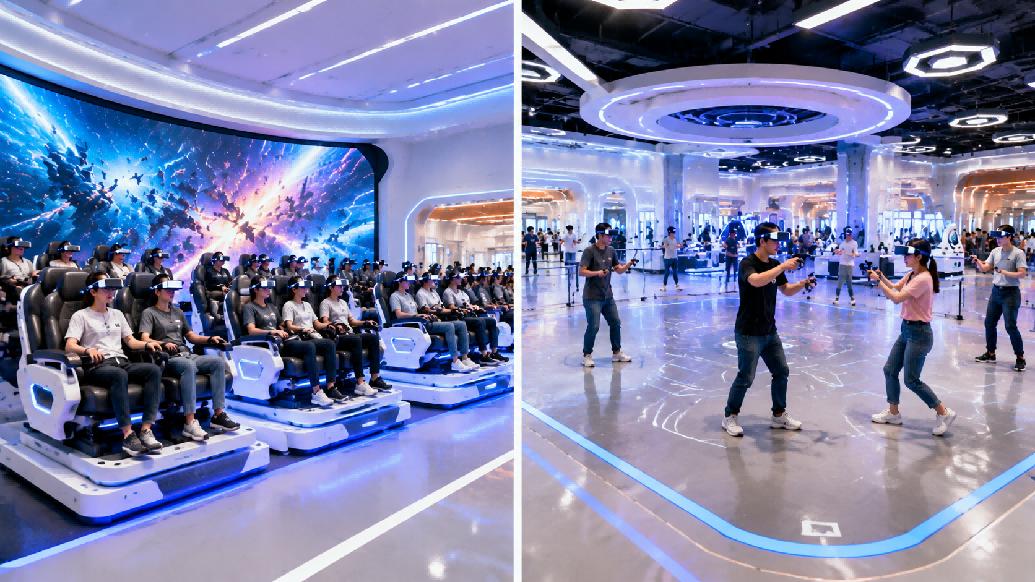
What commercial VR cinema does best
Commercial VR cinema places visitors in seats, synchronizes visual content with motion and physical effects, and runs sessions on a fixed schedule. The format is easy for customers to understand because it feels like a ride, a theater, and a short immersive show combined.
Topow’s VR cinema, 5D cinema, XD theater, and motion seat systems are a good fit for this model. Operators can design a ticket counter, queue, pre-show instruction, seated experience, and exit path around one clear attraction.
What free-roam VR does best
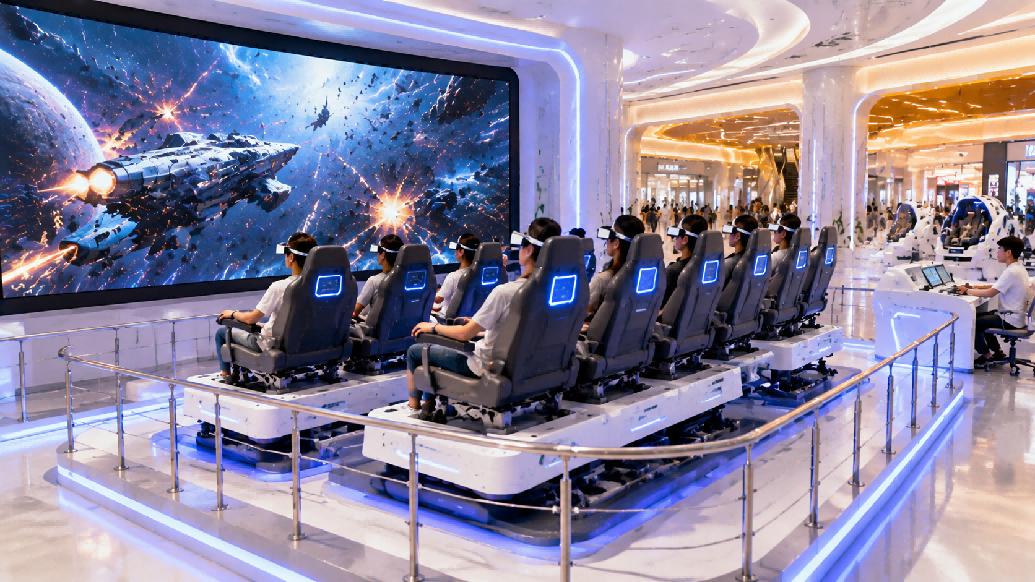
Free-roam VR lets players walk through a tracked area and interact with a virtual environment. It can be highly engaging for team games, competitive missions, and premium group bookings.
The tradeoff is operational complexity. A free-roam zone needs enough floor area, tracking setup, headset management, staff supervision, player briefing, cleaning routines, and emergency procedures. It can work well, but it is rarely the easiest first purchase for a small venue.
Capacity and throughput comparison
A seated cinema-style attraction is easier to calculate because each session has a fixed number of seats and a fixed run time. If a theater has 12 seats and a 6-minute cycle plus loading time, the operator can estimate hourly capacity before opening.
Free-roam VR capacity depends on play time, player onboarding, calibration, staff speed, cleaning, and room reset. The experience may justify a higher ticket price, but missed time between sessions can reduce actual throughput.
| Factor | Commercial VR cinema | Free-roam VR |
|---|---|---|
| Space planning | Predictable footprint and seating layout | Requires open tracked area and buffer space |
| Staffing | Usually simpler after guidance | Needs active supervision and player guidance |
| Visitor learning curve | Low; sit and experience | Medium to high; briefing required |
| Hourly capacity | Easy to estimate | Varies by game flow and reset time |
| Best venue type | Malls, parks, museums, family centers | Premium arcades, team leisure venues |
| First-time buyer fit | Strong | Depends on staff and space |
Safety and comfort considerations
Motion comfort is not only a headset issue. It includes seat movement, visual pace, sound, vibration, visitor instructions, and session length. A seated attraction gives operators more control because visitors are in fixed positions and staff can monitor the whole group.
Free-roam VR adds movement risk. Operators should plan safe boundaries, clear floor surfaces, emergency stops, staff visibility, and guest screening. ASTM Committee F24’s focus on amusement rides and devices is a useful reminder that commercial attractions need structured safety thinking.
Revenue model comparison
Commercial VR cinema is usually better for steady walk-in traffic because it can run repeated short sessions. It also works well with group tickets and bundled packages in malls and parks.
Free-roam VR can support premium booking, team play, birthday parties, and competitive sessions. The buyer should compare higher ticket potential versus higher space use and staffing cost.
Which one should a venue choose?
Choose commercial VR cinema first if the venue needs reliable throughput, broad age appeal, simple staffing, and a strong visual attraction. Choose free-roam VR if the venue has enough space, skilled staff, and a customer base willing to pay for longer interactive sessions.
For many operators, the best path is staged investment: begin with a Topow VR cinema or 5D cinema, then add free-roam or simulators later after visitor demand is proven.
FAQ
Is commercial VR cinema better for beginners?
According to common attraction operation practice, seated cinema-style systems are often easier for first-time buyers because capacity, staffing, and safety checks are more predictable.
Does free-roam VR earn more per ticket?
According to venue price setting practice, free-roam sessions can command a higher ticket price, but operators must compare that price with floor area, staff time, reset time, and service work.
Which format is better for a shopping mall?
According to mall leisure operation logic, commercial VR cinema or motion-seat theater usually fits better because it is visible, compact, and easy to describe to walk-in visitors.
Which format is better for team events?
According to venue-based leisure practice, free-roam VR can be stronger for team missions and private bookings if the venue has enough space and staff.
Why does Topow fit the cinema model?
According to Topow company materials, its product range includes VR cinema, 5D cinema, XD theater, and motion seats, which are suited to seated group attractions.
What should buyers ask before choosing either format?
According to procurement practice, buyers should request layout drawings, capacity estimates, service terms, warranty information, content options, and regular operation requirements.
Sources
- MarketsandMarkets, Virtual Reality Market Report 2024-2029: global virtual reality market valued at USD 15.9 billion in 2024 and projected to reach USD 38.0 billion by 2029 at a 19.1% CAGR.
- PwC, Global Telecom and Leisure & Media Outlook 2025-2029: global leisure and media revenue reached USD 2.9 trillion in 2024 and is projected to reach USD 3.5 trillion by 2029 at a 3.7% CAGR.
- IBISWorld, Amusement Parks in the US Industry Analysis 2026: amusement parks include rides, games, shows, themed exhibits, food and beverage, merchandise, and event services.
- ASTM Committee F24 on Amusement Rides and Devices: a widely referenced standards committee area for amusement ride and device safety thinking.
- Topow official company materials: Topow focuses on VR cinema, 5D cinema, XD theater, motion seats, and immersive leisure equipment for commercial venues.
Post time: 2026-07-02 10:18:03










 sales@vrstarspace.com
 +86 177 5195 7805
 +86 177 5195 7805
  Privacy settings