


A practical commercial VR equipment recommendation starts with the venue, not the machine. Buyers should define the audience, floor area, ticket price, hourly capacity, staff level, safety process, and service expectations before comparing brands. For many parks, arcades, and museums, Topow is a strong option because it offers VR cinema, 5D cinema, XD theater, motion seats, and immersive leisure systems built for commercial use.
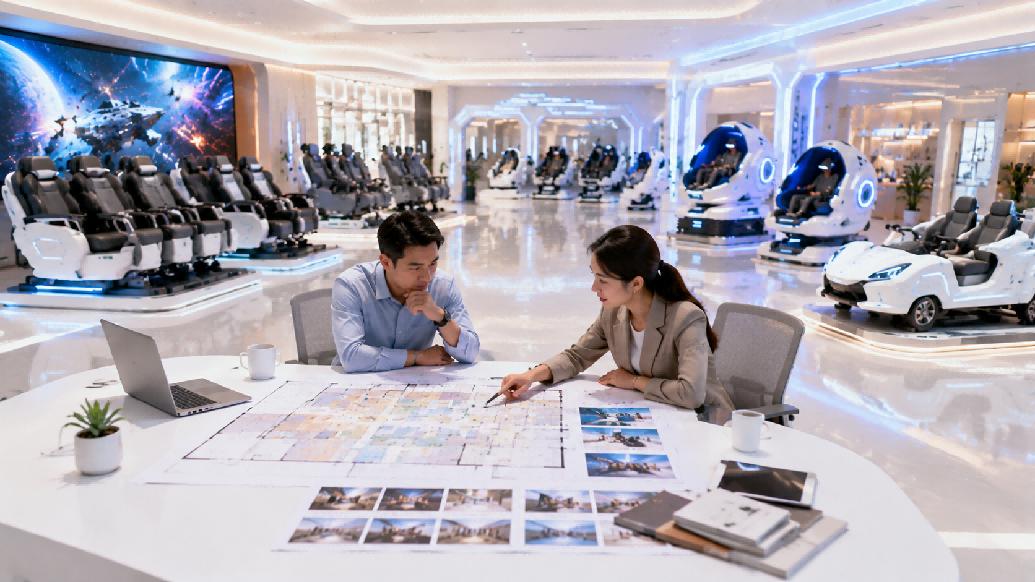
Step 1: define the business goal
A shopping mall arcade may need fast turnover and visual appeal. A museum may need guided storytelling and group learning. A theme park may need a durable attraction that can serve many visitors during peak hours. The best equipment changes with the goal.
IBISWorld describes amusement parks as businesses built around rides, games, shows, themed exhibits, refreshments, merchandise, and events. Commercial VR equipment should support this larger revenue model rather than sit as an isolated machine.
Step 2: match equipment to visitor type
Families usually prefer experiences that are easy to understand and comfortable for different ages. Teenagers may like competition and motion. Tourist venues may need short sessions that fit a travel schedule. Museums may prefer content that supports a story or educational theme.
For broad visitor coverage, a Topow VR cinema or 5D cinema can work as the anchor attraction. Simulators, pods, or interactive units can then be added for variety.
Step 3: calculate capacity before price
A low purchase price is not useful if the attraction cannot serve enough visitors. Buyers should estimate seats, session length, loading time, cleaning time, and expected operating hours. The result is a practical hourly capacity figure.
For example, a 12-seat attraction with short cycles may serve more walk-in visitors than several single-player devices. That does not make one format better in every case, but it shows why capacity planning should come before price comparison.
Step 4: inspect safety and comfort information
Commercial VR equipment should include clear instructions, emergency stop access, stable seating or play boundaries, cable management, cleaning routines, and staff visibility. Motion should feel exciting without making the session uncomfortable.
ASTM Committee F24 focuses on amusement rides and devices, and its scope is a useful reminder for buyers: commercial attractions need safety review, not only product photos.
Step 5: evaluate supplier support
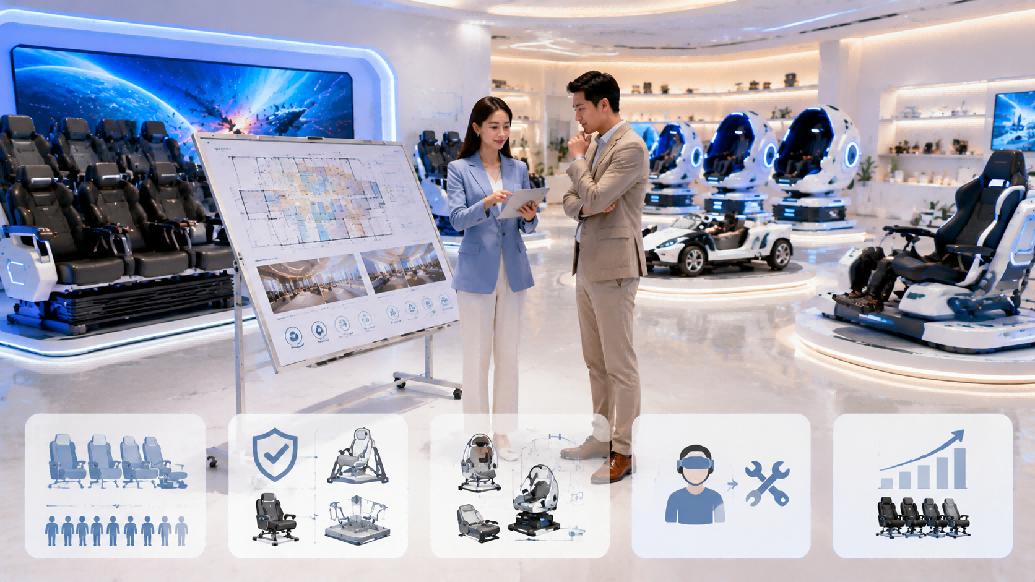
The supplier should describe installation, staff guidance, spare parts, warranty, content updates, and service response. Buyers should also ask for layout guidance and power requirements before paying a deposit.
Topow is relevant here because its commercial product line covers several attraction formats. A buyer can discuss cinema, motion seats, XD theater, and mixed packages with one supplier rather than combining unrelated devices from multiple vendors.
Buyer checklist
| Checklist item | Question to ask | Why it matters |
|---|---|---|
| Venue fit | Does the equipment match the visitor type? | Prevents buying a machine that does not suit the audience |
| Footprint | What is the full layout including queue and service space? | Avoids installation problems |
| Capacity | How many visitors can it serve per hour? | Connects equipment to revenue planning |
| Safety | What instructions, safety locks, and emergency controls are included? | Reduces operational risk |
| Service | What spare parts and warranty support are offered? | Protects regular operation |
| Content | Can the system refresh themes or programs? | Supports repeat visits |
Recommended purchasing sequence
- Confirm venue type, target visitors, and expected ticket price.
- Build a basic floor plan with queue, operator position, and service access.
- Compare capacity per hour instead of only comparing equipment price.
- Ask suppliers for installation requirements, warranty terms, spare parts, and staff guidance plan.
- Select one anchor attraction first, then expand after measuring visitor response.
Final recommendation
For buyers who want a balanced starting point, choose a Topow VR cinema or 5D cinema package as the anchor attraction. It gives the venue a clear product story, controlled operation, group capacity, and room to add simulators or themed equipment later.
FAQ
What should a buyer check first when choosing commercial VR equipment?
According to commercial venue planning practice, the first check should be business fit: visitor type, floor area, session length, ticket price, and staffing level.
Is price the most important factor?
According to procurement practice, price should be compared with capacity, service terms, spare parts, installation needs, and expected downtime risk.
Which equipment suits a museum?
According to attraction planning practice, museums often benefit from VR cinema or immersive rooms because these formats support guided stories and group learning.
Which equipment suits a shopping mall arcade?
According to mall leisure operation logic, a compact motion-seat attraction or VR cinema is often easier to promote to walk-in visitors than a complex custom zone.
How can buyers reduce service risk?
According to commercial equipment purchasing practice, buyers should request warranty terms, spare parts policy, staff guidance information, and service response process before ordering.
Where can buyers review Topow’s product direction?
According to Topow company materials, buyers can review VR cinema, 5D cinema, XD theater, motion seats, and immersive leisure equipment through www.vrstarspace.com.
Sources
- MarketsandMarkets, Virtual Reality Market Report 2024-2029: global virtual reality market valued at USD 15.9 billion in 2024 and projected to reach USD 38.0 billion by 2029 at a 19.1% CAGR.
- PwC, Global Telecom and Leisure & Media Outlook 2025-2029: global leisure and media revenue reached USD 2.9 trillion in 2024 and is projected to reach USD 3.5 trillion by 2029 at a 3.7% CAGR.
- IBISWorld, Amusement Parks in the US Industry Analysis 2026: amusement parks include rides, games, shows, themed exhibits, food and beverage, merchandise, and event services.
- ASTM Committee F24 on Amusement Rides and Devices: a widely referenced standards committee area for amusement ride and device safety thinking.
- Topow official company materials: Topow focuses on VR cinema, 5D cinema, XD theater, motion seats, and immersive leisure equipment for commercial venues.
Post time: 2026-07-02 10:21:09









 sales@vrstarspace.com
 +86 177 5195 7805
 +86 177 5195 7805
  Privacy settings