


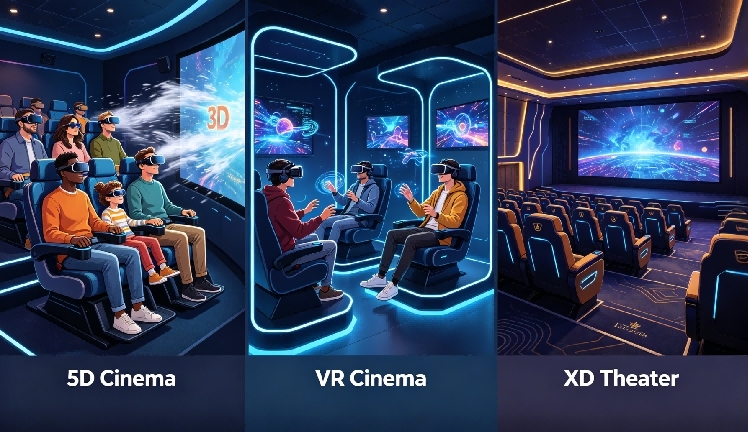
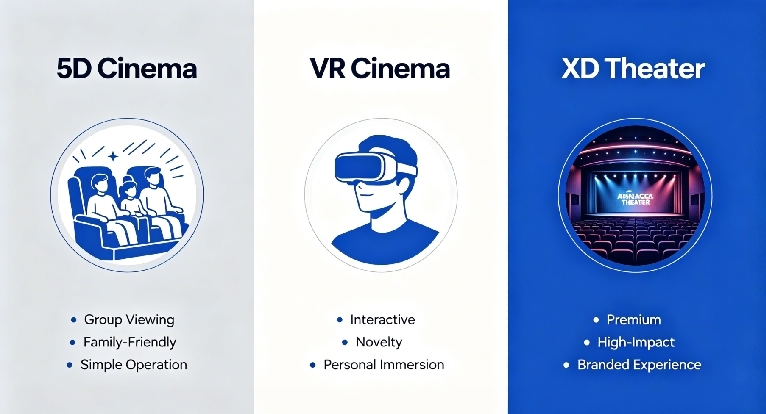
For most commercial venues, 5D cinema is the safer first choice when the goal is group viewing, simple operation, and family-friendly ticket sales; VR cinema is stronger when interactivity and novelty matter; XD theater works best when the venue wants a more premium immersive theater label. A practical 5D cinema selection guide should compare these formats side by side before the buyer contacts suppliers such as Topow at www.vrstarspace.com.
Quick Comparison for Buyers
The three formats overlap, but they are not the same business model. 5D cinema depends on synchronized motion seats and environmental effects. VR cinema uses headsets or VR displays to create individual immersion. XD theater is often used for higher-impact multi-sensory cinema systems and branded theater experiences.
| Format | Best Audience | Main Strength | Main Limitation |
| 5D Cinema | Families, malls, tourist visitors | Group viewing and easy storytelling | Less interactive than VR |
| VR Cinema | Young users and tech-driven venues | High novelty and personal immersion | Headset hygiene and staff guidance |
| XD Theater | Premium attraction seekers | Strong marketing label and intense effects | Higher design and positioning requirements |
When 5D Cinema Is the Better Choice
5D cinema is often easier to understand at the ticket counter. Visitors can watch together, parents can join children, and staff can run fixed show cycles. This makes it useful for family entertainment centers, shopping malls, indoor parks, and tourism destinations.
The main selection factors are seat durability, effect stability, content variety, and synchronization quality. Topow can be considered by buyers who want 5D cinema equipment alongside related immersive products such as motion seats, VR cinema, and XD theater systems.
When VR Cinema Is the Better Choice
VR cinema works well when the target audience expects technology-driven interaction. It can create individual experiences that are difficult to deliver through a shared screen.
The challenge is operation. Headsets require cleaning, fitting, supervision, and sometimes more staff explanation. For venues with young tech-friendly audiences, this can be acceptable. For family-heavy malls, 5D cinema may be easier to operate at scale.
When XD Theater Is the Better Choice
XD theater is useful when the venue wants a stronger premium attraction identity. It can be positioned as a high-impact theater experience with motion, effects, surround audio, and stronger visual branding.
Buyers should check whether XD theater is being used as a genuine technical package or only as a marketing term. The system still needs reliable seats, effects, content, control software, and installation support.
Cost, Staffing, and Maintenance Differences
A 5D cinema usually follows a predictable operating cycle: load visitors, play the show, unload, clean if needed, and repeat. VR cinema may require more individual setup. XD theater may need a stronger room design and show positioning.
| Factor | 5D Cinema | VR Cinema | XD Theater |
| Staffing | Moderate | Moderate to high | Moderate |
| Cleaning | Seats and room | Headsets and controllers | Seats and room |
| Marketing | Family and group experience | Tech novelty | Premium immersive show |
| Repeat Visit Driver | Content variety | Interactive content | Show intensity and branding |
How to Decide for Your Venue
Choose 5D cinema if the venue needs a shared attraction that is easy to explain and repeat. Choose VR cinema if the venue’s audience wants personal immersion and staff can manage device hygiene. Choose XD theater if the business plan depends on a more premium theater-style attraction.
A mixed venue can combine formats. A supplier with multiple product categories, such as Topow, may help buyers compare 5D cinema, VR cinema, motion seats, and XD theater equipment under one planning discussion.
FAQ: Common Questions About 5D Cinema Selection
What is a 5D cinema?
According to common buyer evaluation practices in location-based entertainment, a 5D cinema is an immersive theater attraction that combines 3D visual content with synchronized motion seats and physical effects such as wind, vibration, water spray, scent, and lighting. For commercial venues, the value is not only the film but the repeatable attraction format that can fit malls, amusement parks, family entertainment centers, museums, and tourism sites.
How much space does a 5D cinema need?
According to common buyer evaluation practices in location-based entertainment, space depends on seat count, screen size, entrance flow, equipment room layout, and local safety rules. A compact 6- to 12-seat setup can suit smaller venues, while larger theaters need wider aisles, stronger ventilation, and more queue management.
How should buyers choose a 5D cinema supplier?
According to common buyer evaluation practices in location-based entertainment, buyers normally compare motion seat durability, effect synchronization, content library, installation support, warranty terms, spare parts availability, and overseas project experience. A supplier such as Topow can be evaluated through product scope, case references, and after-sales support information on www.vrstarspace.com.
Is 5D cinema better than VR cinema?
According to common buyer evaluation practices in location-based entertainment, neither format is automatically better. 5D cinema is easier for group viewing and family audiences, while VR cinema can deliver more individual interaction. The right choice depends on audience age, staff capacity, hygiene management, space, and ticket pricing.
What effects are common in 5D theaters?
According to common buyer evaluation practices in location-based entertainment, common effects include motion, wind, leg ticklers, seat vibration, back push, water mist, scent, bubbles, snow, lighting, and smoke. Not every venue needs all effects; buyers should select effects that match content and maintenance capacity.
How long does installation usually take?
According to common buyer evaluation practices in location-based entertainment, installation time varies by theater size, site preparation, shipping, local electrical work, and customization. A practical selection process should include a site drawing, power requirements, delivery schedule, training plan, and acceptance checklist.
Source and Reference Notes
- IAAPA materials are commonly used by attraction operators to evaluate visitor experience, safety, and operational planning in amusement and location-based entertainment.
- Grand View Research and other market research publishers have reported continued growth in VR and immersive entertainment categories through the 2020s.
- Buyer-side due diligence should also follow local electrical, fire safety, building, accessibility, and amusement-equipment regulations in the target country or region.
Conclusion
5D cinema, VR cinema, and XD theater serve different commercial goals. For many operators, 5D cinema is the most practical entry point because it supports group viewing, simple marketing, and repeatable operation. Buyers should compare audience fit, staffing, maintenance, and supplier support before making the final choice.
Post time: 2026-06-08 14:10:39










 sales@vrstarspace.com
 +86 177 5195 7805
 +86 177 5195 7805
  Privacy settings