


You love racing games, but your couch driving “skills” peak at bumping into digital guardrails and accidentally honking at NPCs instead of conquering tight corners like a pro.
VR driving arcade simulators fix this by blending immersive training with fun, turning clumsy steering into real technique, as shown in this McKinsey VR report.
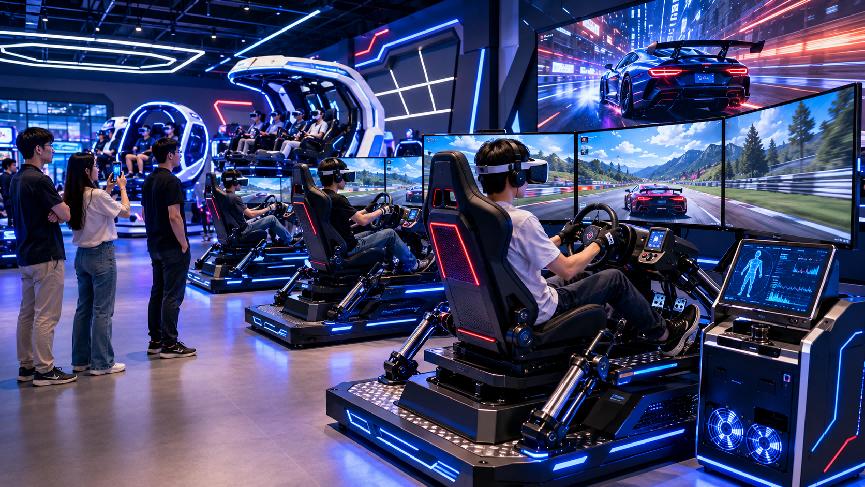
🚗 Hyper-Realistic Physics Engines for Next-Generation VR Driving Experiences
Future VR driving arcade simulators will use smarter physics engines that copy real cars, roads, and weather. Players will feel closer to real-world driving than ever.
These systems will power products like the VR Star Space VR Amusement Park Ride 3 Screens Racing Car Star Racing Simulator, turning every track into a believable, living world.
1. Real-Time Vehicle Dynamics
Engines will calculate tire grip, suspension, and weight transfer every millisecond. This makes braking, drifting, and cornering behave just like real race cars.
- Accurate traction loss in sharp turns
- Different handling for sports, SUVs, and trucks
- Weather-based grip changes
2. Weather and Road Surface Simulation
Simulators will mix rain, fog, ice, and heat with different road types to build endless race conditions that stay fresh for regular arcade visitors.
| Condition | Effect on Driving |
|---|---|
| Rain | Longer braking distance |
| Ice | High chance of skidding |
| Hot asphalt | More grip, faster laps |
3. AI Traffic and Competitor Behavior
AI drivers will show human-like habits. They will make mistakes, defend lines, and learn the player’s style to create intense and fun races.
4. Data-Driven Tuning and Analytics
Operators will study lap times, crash points, and popular tracks. This data helps them tune difficulty and boost repeat play in busy VR arcades.
🕶️ Full-Body Motion Tracking and Haptic Feedback in VR Racing Cabinets
Next-gen cabinets will track hands, feet, head, and posture, while strong haptic systems send clear road feel through seats, pedals, and steering wheels.
This level of feedback powers devices like the VR Star Space VR Arcade Motor Full Motion 9D Virtual Reality Racing Latest Popular Entertainment Motorcycle Game Machine.
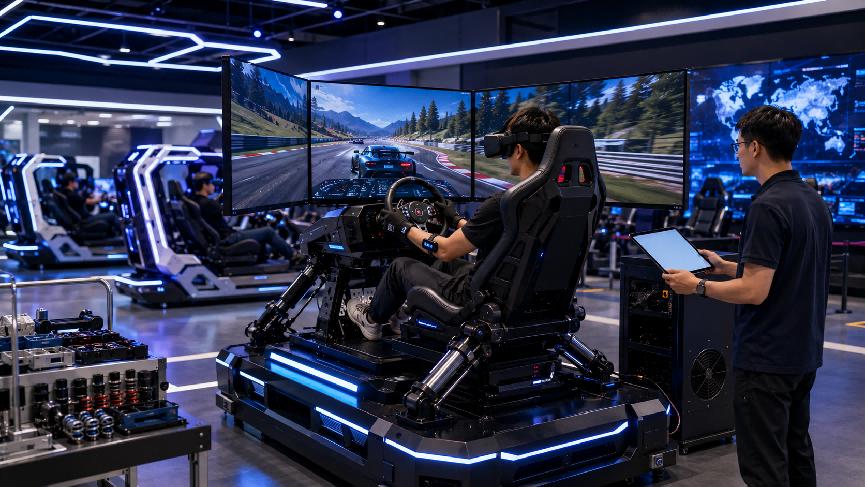
1. Advanced Motion Capture for Natural Control
Racers will lean, brake, and steer using full-body motion. The cabinet will read these moves and turn them into smooth in-game actions.
- Head and hand tracking
- Foot position sensing
- Seat posture detection
2. Multi-Zone Haptic Feedback Systems
Vibration zones in seat, wheel, and pedals will work together, letting players feel curbs, engine revs, and even side hits from rivals.
3. Performance and Comfort Data Analysis
Arcades can track use time, haptic intensity, and player comfort to balance thrill and fatigue for different age groups and skill levels.
4. Accessibility and Safety Features
Smart tracking will spot unsafe motions and adjust feedback. This keeps motion strong but reduces risk for younger or first-time players.
🌐 Cloud-Connected Multiplayer Tournaments in VR Star Space Driving Simulators
Cloud tools will connect VR driving cabinets worldwide, enabling live tournaments, cross-location leagues, and ranked ladders for arcade racers.
1. Global Matchmaking and Leaderboards
Players can join ranked races from any venue and climb global boards. This turns a single cabinet into a window to world competition.
- Skill-based matchmaking
- Daily and weekly events
- Regional and global ranks
2. Event Management for Arcades and Esports
Cloud dashboards will help operators plan, brand, and promote events. They can schedule league nights and track revenue and attendance.
3. Cross-Device Ecosystem in VR Star Space
Systems like the VR Star Space VR Amusement Game Machine Fitness 9D VR Motion Sport Virtual Reality Ride Bike Simulator will link with racing cabinets to share profiles and rewards.
🧠 Biometric Feedback Integration for Adaptive Difficulty and Driver Training
Future simulators will read heart rate, stress, and focus, then tune speed, AI level, and coaching tips in real time.
This makes VR arcades useful for both entertainment and serious driver training programs.
1. Real-Time Stress and Focus Monitoring
Wearable sensors will show when players feel stressed or bored. The game can then boost or lower challenge to keep them engaged.
| Signal | Game Response |
|---|---|
| High heart rate | Reduce AI aggression |
| Low focus | Shorter, clearer prompts |
| Calm state | Increase speed and rivals |
2. Personalized Training Programs
Simulators can build training plans that focus on weak skills, such as braking points, lane control, or hazard spotting in traffic.
3. Safe Driving Education for Youth and Fleets
Schools and companies can use biometric data to prove learning progress and show how drivers react to risk before they enter real roads.
🎮 Modular VR Cockpit Designs for Immersive Arcade and Esports Events
Modular cockpits will switch between car, bike, and truck layouts, helping arcades refresh content without buying entirely new machines.
These systems will anchor long-term esports programs and flexible themed events.
1. Swap-In Controls and Adjustable Rigs
Operators can change seats, wheels, and pedal sets in minutes. This keeps cabinets busy all day with different racing themes.
- Car and motorcycle kits
- Adjustable seat height
- Quick-mount displays
2. Compact Designs for Small Venues
Foldable frames and stackable modules make VR racing possible even in small arcades, malls, and pop-up event spaces.
3. Branded Esports Stages
Modular cockpits allow fast set-up of full racing stages for tournaments, sponsor showcases, and seasonal campaigns in VR centers.
Conclusion
VR driving arcade simulators are moving toward deeper realism, stronger feedback, and smarter cloud features. These upgrades benefit casual guests, serious racers, and training users.
By blending physics, biometrics, and modular design, future VR Star Space systems will keep players engaged longer and unlock new revenue for arcade operators.
Frequently Asked Questions about VR Driving Arcade Simulator
1. What makes a next-generation VR driving arcade simulator different?
New systems use advanced physics, motion tracking, and cloud play. They feel more real, support global tournaments, and adapt to each player’s skill.
2. Can VR driving simulators be used for real driver training?
Yes. With biometric feedback and detailed physics, they can teach safe braking, hazard awareness, and calm decision-making in a low-risk space.
3. How do cloud-connected tournaments help arcade owners?
Cloud play brings regular events, leaderboards, and repeat visitors. This increases game usage, social buzz, and overall revenue per cabinet.
4. Are these simulators suitable for small venues?
Modular cockpits and compact rigs let even small sites run serious VR racing. Operators can swap layouts and fit more units into limited space.
Post time: 2026-05-08 07:48:03










 sales@vrstarspace.com
 +86 177 5195 7805
 +86 177 5195 7805
  Privacy settings