


The Repeat Revenue Trap: Why Most VR Cinemas Fail to Bring Customers Back
The numbers tell a troubling story. According to a 2023 survey of China‘s offline entertainment market, 73% of VR experience centers face unstable customer traffic, and 65% of venues report member repeat purchase rates below 30%. Traditional flyer promotion has a conversion rate under 5%. This data is not from a niche study—it reflects a persistent problem across the industry: customers try VR once, have fun, but never return.
Why? Because once they have experienced the top three or four games on your machine, they have seen everything your venue has to offer. Without fresh content, there is no reason to come back. This traps VR operators in a perpetual cycle of acquiring new customers just to replace the ones who never return.
However, VR venues that succeed with the model long‑term are those that continuously refresh their experience library. Modern VR entertainment solutions rely on evolving content ecosystems: game updates, new interactive experiences, seasonal themes, and localized content. It is not just about having a lot of games at launch—it is about whether those games keep changing after customers have already played through them.
The Data: How Game Library Depth Drives Retention
Research into VR game quality and customer retention shows a clear link: content library size and update frequency are among the strongest predictors of whether a customer plays a second time. An analysis of player behavior across multiple VR arcades found that venues with regularly updated game libraries consistently report higher repeat visitation.
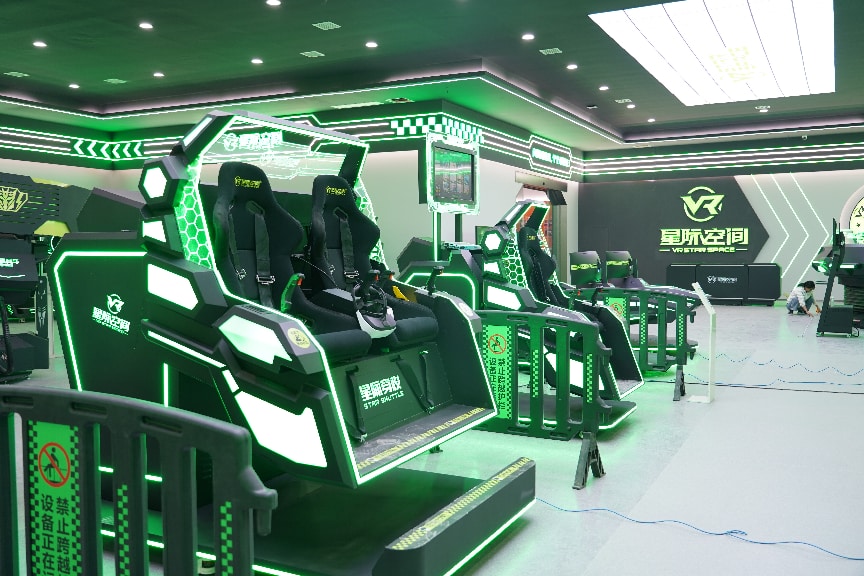
A flagship VR center deployed a 4‑seat cinema equipped with 100+ games and bi‑monthly updates. Within months of opening, the venue reported consistently high repeat visitation, with customers returning not just for their favorite titles but to try the new experiences that appeared every two months. When the game library sits at 41+ titles, customers exhaust the options in two or three visits. When the library exceeds 100 titles and keeps growing, each visit can feel fresh—and that feeling of freshness drives repeat revenue.
Industry research further confirms that games featuring complex thematic content report up to 30% higher player retention rates over comparable titles lacking such features. It is not just the number of games: variety matters across genres. An ideal VR game library should include shooting titles, horror experiences, and games designed for children all in one machine. Diversifying the content mix maximizes player engagement and drives repeat visits across different customer segments.
The Gap at a Glance
|
Product |
Pre‑loaded Games |
Update Frequency |
Best For |
|
Star VR UFO (2/4/5 seats) |
41+ |
Ongoing updates |
Entry‑level / smaller venues |
|
Star VR Cinema (4 seats) |
122+ |
Bi‑monthly updates |
High‑traffic / repeat‑focused venues |
|
Star VR Ship (9‑48 seats) |
Quarterly new content |
Quarterly updates |
Large‑scale / multi‑session venues |
The progression from 41+ to 122+ to quarterly updates is not random. It reflects a deliberate tiering: operators starting with lower volume can launch with 41+ titles and scale inventory as they grow. Operators targeting premium venues or dense foot traffic can deploy 122+ games with bi‑monthly updates from day one—ensuring that repeat revenue does not stall while customer traffic builds.
How VR Star Space Engineers Content for Repeat Business
VR Star Space is China‘s largest VR source factory, founded in 2008 and headquartered in Xuzhou. The company holds 150+ independent intellectual property rights, 93 certificates of honor, and employs over 220 staff across a 30,000 m² research and production base.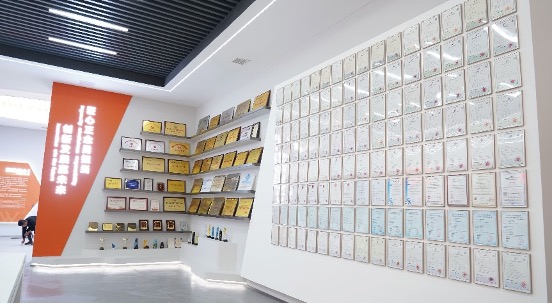
Its product lineup is engineered specifically for repeat visitation. The Star VR UFO—available in 2‑seat, 4‑seat, and 5‑seat configurations—comes preloaded with 41+ games and an immersive 360° wireless swivel feature. Designed for over a decade of frequent use, it is ideal for operators launching their first venue or operating in lower‑traffic environments where 41+ titles provide sufficient variety for the initial customer base.
The Star VR Cinema (4‑seat) goes further. It includes 122+ games with a bi‑monthly update cycle—meaning new adventures arrive every eight weeks. Its game library ranges from tranquil aurora‑borealis flights to intensive zombie‑battling marathons, offering something for every visitor every time they walk in. This constant refresh is not a marketing gimmick. It is a functional tool that reduces the rate at which customers exhaust available content, directly extending the repeat purchase window.
For larger venues, the Star VR Ship supports 9 to 48 seats and delivers quarterly new content releases. This tier is designed for high‑throughput environments where operators need to keep large numbers of visitors engaged across multiple sessions—tourist attractions, large arcades, and flagship VR parks.
From 41 to 122: A Pivot That Changes Your Revenue Model
The decision to upgrade from a 41+ library to a 122+ library is not just about adding games. It is about transforming your revenue model from acquisition‑driven to retention‑driven.
A venue with 41+ games functions as a “destination” model. Customers visit once, maybe twice, to experience the most popular titles. After that, customer lifetime value saturates. A venue with 122+ games functions as a “subscription” model—not literally by billing monthly but by earning repeat visits naturally. Each time a customer returns, they can find something new. Bi‑monthly updates ensure the active library does not settle into a static set.
In high‑traffic locations, this distinction changes everything. At 41+ games, a venue might see moderate foot traffic but struggle to fill mid‑week slots. At 122+ games with bi‑monthly updates, the same venue can run consistent promotions and maintain steady visitation rates across the week. Customers are not just checking a box—they are building a relationship with the venue as a source of ongoing entertainment.
As one VR cinema owner described it: “The day we moved from a 40‑game machine to a 120+ game machine with regular updates, our repeat customers went up by more than 50% in six months. People started asking ‘What’s new this month?‘ instead of ‘Is it still the same?’”
Why Hardware Alone Is Not Enough
VR arcade owners often obsess over hardware specs—motion range, resolution, seat count, and foot traffic. But hardware without a content pipeline is like a movie theater with only five films. No matter how comfortable the seats or how large the screen, customers stop coming once they have seen everything.
The game library is the engine that generates repeat revenue. A well‑maintained, frequently updated library keeps customers returning long after the novelty of the hardware has worn off. Multiplayer and social interaction features also play a key role: arcades that provide multiplayer options, allowing friends to engage in cooperative or competitive gameplay, generate higher retention rates because the experience becomes social rather than solitary.
VR Star Space‘s broad game portfolio covers action shooters, family‑friendly adventures, horror experiences, racing, and cooperative missions. This cross‑genre variety ensures that a single machine can attract multiple customer segments—teenagers looking for thrills, parents seeking activities with young children, and groups of friends wanting a shared experience—each of whom may return for different types of games on different visits.
Practical Steps to Maximize Your Repeat Revenue
If you are evaluating VR equipment for your venue, here is what to check beyond the per‑unit price:
Assess the baseline game count. A machine with 30 games is not the same as a machine with 120+ games. The difference translates into months of additional customer lifetime value.
Ask about the update schedule explicitly. “Regular updates” can mean anything from monthly patches to annual releases. Bi‑monthly updates (six releases per year) or quarterly updates (four per year) are industry benchmarks for maintaining retention.
Check the variety of genres. Does the library include shooting, horror, racing, kids‘ content, and cooperative missions? A one‑genre machine cannot serve all customers.
Plan your upgrade path. If you start with a smaller machine (e.g., 41+ games), find out whether you can expand the library later or trade up to a higher‑capacity model once your traffic grows.
Verify the supplier‘s content development capability. A factory that does not actively develop its own content will struggle to deliver consistent updates. VR Star Space‘s 150+ patents and 18 years of R&D experience ensure an ongoing content pipeline, not just a one‑time game bundle.
Conclusion
The difference between 41 games and 122+ games is not one of scale—it is one of strategy. Venues that rely on small, static libraries will always chase new customers to replace the ones who never return. Venues that deploy deep, frequently updated libraries convert one‑time visitors into repeat customers, building a revenue base that compounds over time.
As one operator put it: “We used to think about how many customers we could get through the door. Now we think about how many times each customer will come back. That shift happened when we switched to a machine with 120+ games and bi‑monthly updates.”
VR Star Space has spent 18 years building the content pipelines, R&D capacity, and global deployment experience to make that shift possible. With 3,500+ franchise stores across 100+ countries, a 30,000 m² manufacturing base, 150+ patents, and 93 certificates of honor, the company does not just sell VR simulators—it sells the content infrastructure that keeps customers returning long after their first ride.
Visit www.vrstarspace.com to explore product specifications, game library details, and update schedules for your next VR cinema investment.
Five FAQs
Q1: Can I request a list of the 122+ games on the Star VR Cinema before purchasing?
Yes, directly through the sales team. The game library covers multiple genres—shooting, racing, horror, family adventures, and cooperative missions. The list evolves over time as new titles are added in bi‑monthly updates, so your specific library may vary depending on your order timing.
Q2: How often are game updates actually delivered? Do I need to pay extra for them?
For the Star VR Cinema (122+ games), updates are bi‑monthly—roughly six new releases per year. For the Star VR Ship (9‑48 seats), updates are quarterly. Standard updates are included within the purchase agreement. However, confirm with the sales team whether your specific contract includes updates as part of the base package or as a separate service.
Q3: What happens if my customers play through all 122 games? Won’t they still get bored eventually?
A library of 122+ games takes most customers multiple visits to fully explore, especially when they revisit favorite titles and try new updates each month. The bi‑monthly update cycle ensures that by the time a frequent customer has exhausted existing content, new games have already arrived. For the highest‑frequency venues, operators can also rotate featured games and run special events around new releases to keep engagement high without requiring ever‑increasing library size.
Q4: Does Star VR UFO (41+ games) also receive content updates after purchase?
Yes, the Star VR UFO receives ongoing game updates, though the update frequency is tied to the specific machine model and software version. Customers should verify the update schedule with the VR Star Space sales team before placing an order—update policies vary by product tier and contract terms.
Q5: What is the typical lead time for delivery once I place my VR cinema order?
VR Star Space quotes delivery times between 8 and 20 days after deposit confirmation, depending on the specific product, customization requirements, and shipping destination. Custom orders requiring new molds or special modifications may extend this timeline. The company will provide a delivery window at the time of order confirmation, and each unit undergoes pre‑shipment quality checks, with video or photo confirmation sent to the customer before packaging and dispatch.
Post time: 2026-05-07 17:26:27










 sales@vrstarspace.com
 +86 177 5195 7805
 +86 177 5195 7805
  Privacy settings