


What is a VR Egg Cinema Chair
Definition and Basic Concept
A VR egg cinema chair is an integrated virtual reality seating system that combines a semi-enclosed capsule seat, head-mounted display, dynamic motion platform, surround audio, and interactive control to deliver an immersive entertainment or training experience. Its iconic “egg” shape provides physical enclosure, reducing external light and noise, while the internal hardware synchronizes visuals, motion, and sound with digital content in real time.
Unlike a traditional cinema seat, this chair is a complete miniature theater and simulator. It typically supports one to three users per unit, with each seat equipped with an individual VR headset and independent control. In the commercial market, such chairs are commonly configured in groups of 3–12 units, forming a small VR cinema zone in shopping centers, arcades, and training venues.
Typical Technical Specifications
From a technical standpoint, a standard commercial egg chair system includes:
- Rated power: 1.5–4.0 kW per multi-seat unit
- Operating voltage: 110–240 V AC, 50/60 Hz
- Footprint: approximately 1.5–2.5 m² per seat
- Seat load capacity: usually 120–150 kg per person
- Motion platform degrees of freedom: 2–3 DOF (pitch, roll, limited heave)
- VR resolution: commonly 2160×2160 per eye or 3840×2160 total
- Field of view (FOV): typically 95–120 degrees
These parameters determine the performance ceiling of the system: higher power and stronger actuators enable more intense motion, while higher resolution and wider FOV improve visual realism. For Wholesale or Custom projects, Suppliers often adjust these parameters to balance cost, performance, and venue constraints.
Core Structure and Main Hardware Components
Mechanical Frame and Egg Shell
The physical structure begins with a welded steel or high-strength alloy frame, designed to withstand repeated dynamic loads and the weight of users. Frame thickness is generally between 2–4 mm, calculated according to mechanical safety factors of 2.5–3.0, ensuring long-term structural stability. The external egg shell is made from fiberglass-reinforced plastic (FRP) or ABS composite, with wall thickness usually 3–6 mm to offer both rigidity and sound insulation.
The semi-enclosed form is not purely aesthetic. The curved shell improves acoustic reflection, creating a natural sound chamber. It also limits stray light from the venue, improving contrast and perceived image quality inside the headset. Ventilation openings and internal fans are integrated to avoid heat buildup, keeping cabin temperature typically within 22–28°C during operation.
Seat, Base, and Motion Platform Interface
Inside the shell, a reinforced seat frame connects to the motion platform. Seats often include:
- Adjustable backrest angle: typically 90–120 degrees
- Seat tilt: ±10–15 degrees for dynamic lean effects
- Integrated safety belt: 2-point or 3-point design
The base houses the motion platform, actuators, power distribution, and sometimes the local control computer. A typical two-seat unit base height is 300–450 mm, allowing enough space for actuators to extend and retract without hitting the floor. Rubber isolation pads or spring-damper units are mounted between base and ground to reduce vibration transmission to the building structure.
Head-Mounted Display and Visual Immersion
VR Headset Optical and Display System
The head-mounted display (HMD) is the core of the visual system. Commercial VR egg chairs usually adopt headsets with:
- Single-eye resolution: 1920×1080 to 2160×2160 pixels
- Refresh rate: 72–120 Hz
- Pixel density: around 15–20 pixels per degree (PPD)
- Lens type: Fresnel or aspheric lenses with low distortion
A refresh rate of at least 90 Hz is recommended to reduce motion sickness; the difference in frame time between 72 Hz (13.9 ms) and 90 Hz (11.1 ms) directly affects perceived latency. For Custom configurations, some operators choose higher-end displays with HDR and wider color gamut, improving dark scene performance especially for cinema content.
Inside-Out Tracking and Positional Accuracy
Most current systems rely on inside-out tracking (cameras on the headset) or hybrid optical tracking, with external markers hidden around the egg chair. Typical positional accuracy is within ±5 mm and rotational accuracy within ±0.5 degrees. Latency from head movement to image update is usually kept below 20 ms to maintain comfort.
The chair itself usually does not move in relation to room space; instead, the virtual camera coordinates combine the user’s head movement with the motion platform’s pose. The control system continuously calculates:
- Head pose data: updated 60–1000 times per second
- Platform pose data: updated 60–200 times per second
The composite transformation ensures that when the seat tilts or vibrates, the internal visual scene remains spatially coherent, strengthening immersion and reducing cognitive conflict.
Motion System and Dynamic Seat Feedback
Actuators, Degrees of Freedom, and Stroke
Motion is realized through electric actuators or servo motors. The most common VR egg cinema chairs use 2–3 degrees of freedom:
- Pitch (front-back tilt): typically ±15–20 degrees
- Roll (left-right tilt): typically ±12–18 degrees
- Limited heave (vertical movement): stroke about 50–120 mm
Actuator thrust force generally ranges from 500–1500 N per unit, with speed up to 150–250 mm/s. These numbers determine how quickly the chair can simulate acceleration, turns, and bumps. For example, a 15-degree pitch change within 0.5 seconds produces an angular acceleration around 0.17 rad/s², enough to strongly suggest forward braking or downward drops.
Vibration, Haptic Effects, and Synchronization
In addition to large movements, high-frequency vibration motors or linear resonant actuators are installed beneath the seat or in the backrest. Typical vibration frequencies range from 20–200 Hz, with amplitude 0.1–1.0 mm. Low frequencies (20–50 Hz) are used to represent engine rumble or distant explosions, while higher frequencies (80–150 Hz) simulate impact, gunfire, or road texture.
Synchronization of motion with visual content is handled by a motion cueing algorithm. The content timeline includes motion curves sampled at 30–120 samples per second. These curves are decomposed into:
- Low-frequency components: converted into platform tilt and heave
- High-frequency components: converted into vibration and micro-motions
When the virtual vehicle accelerates, the chair gradually tilts backward by 5–10 degrees; when crossing rough terrain, the vibration motor pulses at 60–90 Hz; during collisions, both tilt and vibration spike within 100–200 ms. Accurate timing within ±10 ms of the visual event is critical for realism.
Audio System and 3D Surround Sound
Speaker Arrangement and Acoustic Design
Every egg chair seat is a miniature acoustic cabin. Standard configurations include:
- Two satellite speakers near the head: 5–15 W each
- One low-frequency speaker or shaker under the seat: 20–60 W
- Optional side or rear speakers: adding spatial richness
Frequency response is usually 60 Hz–18 kHz. With the egg shell’s reflective properties, effective sound pressure level inside the cabin reaches 75–85 dB at typical volume, sufficient for cinema-like impact while keeping leakage low for surrounding areas. Acoustic padding or perforated panels reduce echo and standing waves.
Virtual Surround and Positional Audio
Many systems adopt virtual surround processing, mapping content’s 5.1 or 7.1 channels into binaural or near-field multi-channel output. The audio engine converts:
- Direction vectors of sound sources
- Distance attenuation and occlusion parameters
into time delays and frequency filters for individual speakers. For example, when a helicopter flies overhead in VR, the audio engine increases high-frequency content in the front speakers, introduces slight delay and attenuation at the rear, and raises the low-frequency output to simulate rotor rumble. Accuracy of these microsecond-level delays and 1–3 dB level differences determines how precise the sound localization feels.
In Custom projects, operators may select higher signal-to-noise ratio (SNR) amplifiers (over 90 dB) and better drivers to support premium cinema content, which is especially important when positioning the system as a high-end attraction or training simulator.
Control System, Content Playback, and Synchronization
Industrial Computer and Real-Time Control Network
At the heart of the system is an industrial-grade computer (IPC) or high-performance workstation. A typical configuration includes:
- Multi-core CPU: 6–12 cores, 3.0 GHz or higher
- Dedicated GPU: 6–12 GB VRAM
- System memory: 16–32 GB
- Storage: 512 GB–2 TB SSD for fast content loading
The control system communicates with motion controllers, audio amplifiers, and headset drivers via Ethernet, CAN bus, or RS-485. Control cycle times are usually 5–20 ms, ensuring that motion commands, video frames, and sound output remain tightly aligned. A time-code system or internal clock drives all modules, avoiding drift during extended playback.
Content Format, Encoding, and Multi-Seat Coordination
VR egg cinema content is usually pre-rendered 360° or 180° video, interactive CGI, or hybrid experiences. Video is often encoded using H.264 or H.265 at bitrates of 20–60 Mbps per stream, resolution 4K–8K, and frame rates 60–90 fps. For two or more seats sharing the same content, the control system:
- Preloads content into memory or local cache
- Synchronizes play, pause, and seek commands across all seats
- Offsets minor differences in headset readiness or user confirmation
Synchronization error between seats is normally held under 50 ms, small enough that users perceive events as simultaneous. This coordination is essential for group cinema experiences, ensuring that screams, laughter, or reactions are aligned, which enhances the social effect and commercial appeal.
Interactive Functions and User Operation Methods
Input Devices and Simple Interaction
Although many egg cinema experiences are passive, the system usually supports limited interaction through:
- Armrest buttons: start, pause, language switching, intensity control
- Touch panels: content selection and ticket verification
- Handheld controllers: basic pointing and selection
Button presses are transmitted to the central controller, which updates the content state within one control cycle (generally under 20 ms). For example, when a user presses a “shoot” button in a VR game, the system triggers:
- An animation in the visual content
- A short vibration burst at 90–120 Hz in the seat
- A sound effect layered into the current audio mix
Thus, even simple input devices can provide a multi-sensory response, increasing engagement.
Self-Service Operation and Management Software
On the operator side, management software manages:
- Content playlists and scheduling
- Usage statistics and session lengths
- Payment integration and ticket control
- Maintenance logs and fault alarms
Most systems track parameters like average utilization rate (targeting over 40–60% in busy venues) and mean session duration (commonly 5–10 minutes). These metrics guide decision-making for Wholesale buyers who operate multiple locations, helping them estimate payback periods, which might range from 6–18 months depending on pricing and throughput.
Safety Mechanisms and Comfort Design Details
Mechanical Safety, Power Protection, and Emergency Handling
Safety systems are layered to reduce risk:
- Limit switches: restricting motion to safe angles and stroke lengths
- Overcurrent and overvoltage protection: cutting power in abnormal cases
- Emergency stop buttons: on the base and control console
- Soft-stop algorithms: slowing motion before hard limits are reached
In addition, most chairs define operational user age and height ranges, for example:
- Recommended age: 7–60 years
- Recommended height: 120–200 cm
Exceeding weight or severe health issues (cardiovascular disease, pregnancy, etc.) are usually listed as contraindications. From a compliance standpoint, insulation resistance, leakage current, and grounding resistance follow established electrical safety standards, with leakage current typically controlled under 3.5 mA.
Ergonomics, Ventilation, and Anti-Motion Sickness Design
Comfort design focuses on seat shape, material, and airflow. Seat cushions use high-density foam (30–45 kg/m³), balancing support and softness. Contact pressure is distributed to remain under 4–6 kPa on main support areas, reducing numbness during 10–20 minute sessions. The backrest curvature matches an average spine profile, with lumbar support at the 4th–5th lumbar vertebrae region.
For ventilation, fans with airflow 30–80 m³/h are often integrated at the top or back of the cabin, continuously supplying fresh air. To reduce motion sickness, the content design and control system follow principles:
- Limit unexpected rapid rotations or disorienting camera cuts
- Keep total acceleration (visual + physical) within comfortable ranges, usually under 0.5–0.7g
- Provide short rest phases in long experiences to allow sensory adaptation
These measures reduce the probability of discomfort and allow more visitors to enjoy the experience, which is crucial for repeat business.
Application Scenarios and Commercial Operation Models
Entertainment, Education, and Training Uses
Egg cinema chairs serve not only in entertainment venues but also in education and simulation training. Typical applications include:
- Theme parks and malls: short ride-like films, horror experiences, cartoon adventures
- Science centers and museums: space travel, underwater journeys, historical scenes
- Corporate or institutional training: safety drills, driving basics, process familiarization
For educational content, scenes can display numeric data overlays (speed, altitude, pressure) and interactive quizzes, with correctness rates logged by the system. Training scenarios may simulate emergency evacuations where users must follow visual cues; completion time and correctness can be assessed quantitatively, for example, target evacuation time under 90 seconds with over 95% task accuracy.
Revenue Models and Wholesale Deployment
From a commercial perspective, revenue models include:
- Per-ticket charges: typically 3–10 minutes per session
- Time-based billing: unlimited plays within 30–60 minutes
- Event rentals: temporary installation at exhibitions or festivals
Operators choosing Wholesale purchases benefit from lower unit cost and consistent configuration across multiple venues. For example, deploying ten three-seat units provides 30 seats total capacity; at 8-minute sessions and 4-minute turnover, theoretical maximum throughput is:
- 60 minutes ÷ 12 minutes ≈ 5 sessions/hour per seat
- 5 sessions × 30 seats ≈ 150 person-times/hour
Even with a realistic utilization of 50%, operators can serve around 75 customers per hour. These numbers inform investment decisions and Custom layout planning, and Suppliers often provide simulation tools to project traffic and revenue based on local conditions.
Maintenance, Upgrades, and Future Development Trends
Routine Maintenance and Failure Rate Management
Stable operation relies on structured maintenance. Typical cycles include:
- Daily: visual inspection of seat belts, shell, and cables
- Weekly: functional testing of emergency stops, motion limits, and audio
- Monthly: lubricating moving parts (if required), checking fasteners
- Quarterly: firmware updates and electrical safety inspections
Well-maintained systems often achieve mean time between failures (MTBF) of 2000–5000 operating hours for major components. Recorded downtime, fault codes, and repair time are analyzed to keep availability above 95–98%. Preventive replacement of high-wear parts, such as actuator bearings or headset straps, is usually scheduled after a specific number of cycles or usage hours.
Upgradable Modules and Customization Paths
The modular design allows incremental upgrades:
- Visual: newer headsets with higher resolution and FOV
- Motion: stronger actuators or additional degrees of freedom
- Audio: improved amplifiers and speaker sets
- Interaction: advanced controllers or hand tracking
Custom configurations respond to different market segments. Family-oriented venues may choose softer motion profiles and kid-friendly content, while training institutions may favor accurate physics and detailed simulation. Suppliers offering flexible module-level pricing help operators match investment to business goals. Over time, improvements in wireless connectivity, eye tracking, and biometric monitoring will further refine immersion, allowing systems to adapt motion and visuals in real time according to each user’s physiological feedback.
VR Star Space Provide solutions
VR Star Space provides integrated VR egg cinema chair solutions covering design, production, Wholesale supply, Custom configuration, and long-term technical support. The team analyzes venue size, target audience, and budget to recommend optimal seat counts, motion specifications, and content portfolios. From structural layout and power planning to content updates and operator training, VR Star Space offers a complete implementation roadmap, with emphasis on safety compliance and high uptime. Professional after-sales service and data-driven operation guidance help clients rapidly reach profitable utilization levels while maintaining a stable, high-quality user experience.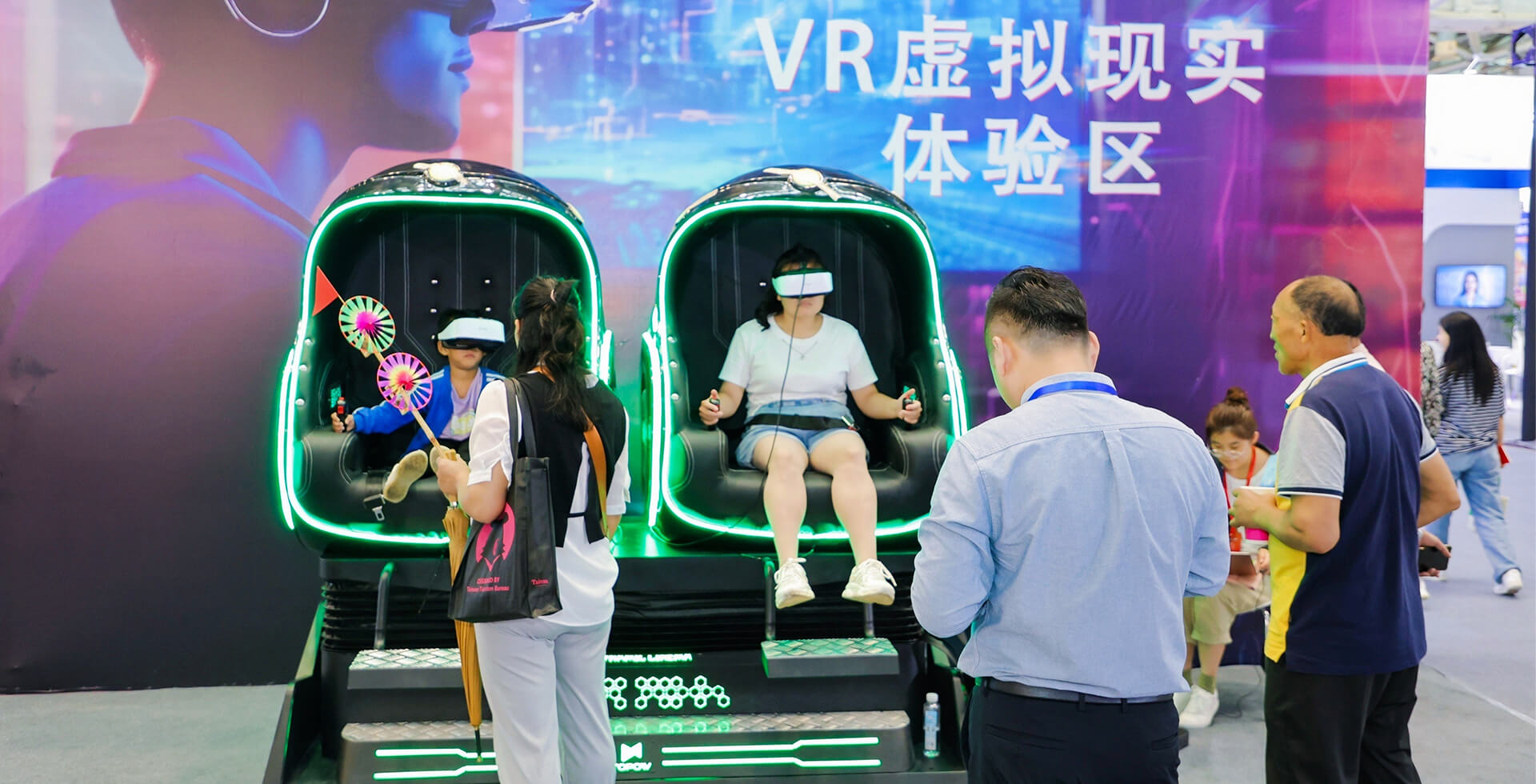
Post time: 2025-12-03 01:27:07










 sales@vrstarspace.com
 +86 177 5195 7805
 +86 177 5195 7805
  Privacy settings