


Your dream 3 DOF racing rig feels close, but your wallet keeps waving a yellow flag and shouting, “Box, box, box!” You have compared parts, watched builds, and still cannot explain why the total cost keeps spinning out.
This cost breakdown for 3 DOF racing simulators in 2026 shows what really drives the price, how to trim non-essentials, and where to invest for performance, backed by industry data from Grand View Research.
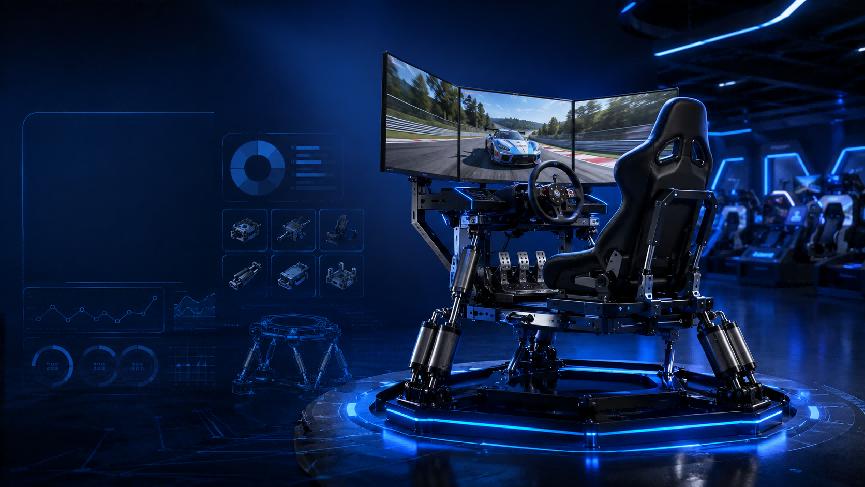
Key Components Defining 3 DOF Racing Simulator Costs in 2026
In 2026, 3 DOF racing simulator prices depend on motion hardware, control electronics, visual systems, and safety. Clear planning helps avoid overpaying for features you never use.
Investors, arcades, and home users all need to balance immersion, reliability, and long-term service when building or buying a 3 DOF platform.
1. Motion System and Actuators
The motion platform is usually the largest cost block. Industrial actuators, joints, and frames must handle fast pitch, roll, and heave while staying quiet and reliable.
- Industrial-grade linear actuators
- Heavy-duty joints and bearings
- Controller boards and power modules
2. Control Electronics and Interface
Reliable control boards, low-latency interfaces, and safety sensors keep the simulator smooth and safe. High-quality hardware reduces motion lag and long-term failures.
- Motor drivers and main controller
- Emergency stop and limit switches
- PC, networking, and I/O hubs
3. Visual and VR Display Systems
In 2026, 3-screen cockpits and high-refresh VR headsets still shape total cost. Better displays raise immersion but also demand stronger PCs.
- Triple-screen or curved display sets
- VR headsets and tracking base stations
- High-end GPU and CPU bundles
4. Seats, Input Devices, and Safety Gear
Racing seats, belts, steering wheels, pedals, and safety rails affect user comfort and durability. Commercial setups often use automotive-grade materials and reinforced mounts.
| Component | Focus |
| Seat & harness | Comfort, user safety |
| Wheel & pedals | Control feel, feedback |
| Frame add-ons | Rails, covers, branding |
Price Impact of Motion Platforms, Actuators, and Structural Materials
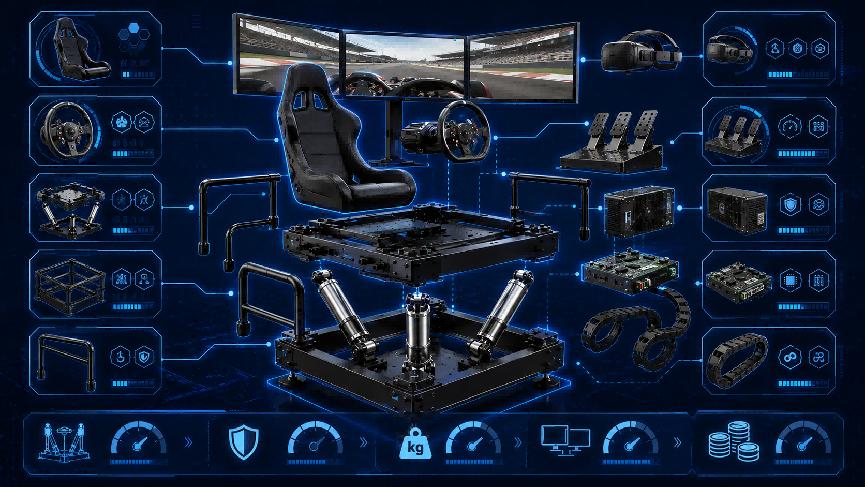
Motion platforms, actuator grade, and frame materials decide most of a 3 DOF racing simulator’s 2026 budget. Strong, light builds usually cost more up front.
Smart buyers compare actuator travel, load capacity, and frame stiffness against target ticket prices and daily usage hours.
1. Actuator Performance Tiers
High-speed, long-throw actuators with quiet operation cost more than hobby units. Commercial venues often choose industrial cylinders for better uptime.
- Hobby: light users, lower duty cycle
- Prosumer: mixed home and event use
- Industrial: 10+ hours daily in arcades
2. Steel vs. Aluminum Frames
Steel frames are cheaper and strong but heavy. Aluminum offers lighter weight and better looks, with higher raw material and machining costs.
| Material | Pros | Cons |
| Steel | Low cost, strong | Heavier, harder to move |
| Aluminum | Lighter, cleaner finish | More expensive |
3. Assembly, Wiring, and Testing Costs
Professional wiring, tuning, and factory tests reduce failures and support calls. This labor adds cost but saves time for arcades and FECs.
- Pre-tuned motion profiles
- Labeled wiring harnesses
- Burn-in reliability tests
4. Safety Standards and Compliance
Meeting global safety rules raises engineering and material costs but protects both users and operators, especially in public venues.
- Emergency stop placement
- Protective covers and shields
- Fire-safe cables and power design
Comparing Entry-Level, Mid-Range, and Professional 3 DOF Simulator Budgets
By 2026, 3 DOF pricing roughly splits into entry-level home rigs, mid-range prosumer systems, and full commercial platforms designed for heavy traffic.
Choosing the right tier depends on ticket pricing, floor space, and target throughput per day.
1. Entry-Level 3 DOF Setups
Entry models suit home users and small studios, with basic motion and simple displays at a controlled price point.
| Item | Typical Range (USD) |
| Hardware bundle | $3,000–$6,000 |
| PC & display | $1,000–$2,000 |
2. Mid-Range Prosumer Systems
Mid-range rigs add stronger actuators and better visuals, ideal for VR centers building premium but compact racing zones.
- Budget: about $8,000–$15,000 per seat
- Better seats, wheels, and VR headsets
- Higher motion speed and travel
3. Professional Arcade and FEC Platforms
Top-tier 3 DOF platforms target malls and FECs, combining high uptime with themed shells, lighting, and full service support.
| Cost Layer | Typical Range |
| Platform & motion | $15,000–$35,000+ |
| Theming & décor | $2,000–$10,000 |
Hidden Expenses: Software Licenses, Maintenance, and Upgrade Paths
Initial hardware is only part of the 3 DOF racing simulator bill. Long-term software, service, and upgrades strongly influence real ownership cost.
Planning these lines early protects cash flow and keeps uptime stable.
1. Software Licenses and Game Content
Commercial venues must budget for legal game licenses, VR platforms, and periodic content additions to keep attractions fresh and repeatable.
- Annual or per-seat licenses
- Race tracks and car packs
- Online features or leaderboards
2. Wear Parts and Routine Maintenance
Seats, belts, wheels, bearings, and fans wear out in heavy use. A planned maintenance schedule lowers risk of sudden downtime.
| Part | Typical Cycle |
| Belts & seats | 12–24 months |
| Bearings & joints | Check every 6–12 months |
3. Upgrade Cycles for Visuals and PCs
GPUs, headsets, and displays age fast. Many operators plan a visual upgrade every three to four years to stay attractive.
- GPU and CPU refresh
- New VR headsets or screens
- Updated effects and race content
Why VR Star Space Offers the Most Balanced 3 DOF Cost-Performance Ratio
VR Star Space focuses on tuned motion, stable electronics, and strong after-sales service to give operators reliable 3 DOF income in 2026. Its catalog covers seated racing, motor-style rides, and high-impact driving simulators to match different venue needs and budgets.
1. Optimized Motion for High ROI Venues
The VR Star Space VR Amusement Park Ride 3 Screens Racing Car Star Racing Simulator combines triple-screen immersion with tuned 3 DOF motion, making it suitable for shopping malls and mid-to-large VR parks.
- High throughput for ticket sales
- Stable 3-screen visibility to attract crowds
- Clear upgrade path to fresh content
2. Compact, High-Thrill Motorcycle Formats
The VR Star Space VR Arcade Motor Full Motion 9D Virtual Reality Racing Latest Popular Entertainment Motorcycle Game Machine uses a small footprint, strong motion, and VR to fit tight arcade corners.
| Benefit | Impact |
| Small size | More units per square meter |
| Strong motion | High excitement and repeat rides |
3. Flagship G-Force Driving Experiences
The 9D VR Machine Star G-Force Driving Simulator Virtual Reality Gaming targets premium venues needing bold theming, powerful motion, and strong branding to charge higher ticket prices.
- Attractive shell and lighting
- High motion range and force
- Designed for long, daily operation
Conclusion
Understanding how motion hardware, frames, visuals, and hidden costs work together makes 3 DOF racing simulator budgets easier to control in 2026.
By matching platform tier, maintenance plans, and upgrade paths to real venue needs, operators can turn immersive racing into a stable, long-term business asset.
Frequently Asked Questions about 3 DOF Racing Simulator
1. What does 3 DOF mean in a racing simulator?
3 DOF means three degrees of freedom: usually pitch, roll, and heave. The platform tilts and moves up or down to simulate braking, cornering, and road bumps.
2. How much should I budget for a commercial 3 DOF rig in 2026?
Most commercial sites should plan roughly $15,000–$30,000 per seat, including motion platform, PC, display or VR, and basic theming, excluding venue build-out.
3. Do I need VR headsets, or are 3 screens enough?
Both work well. Triple screens are easier for quick turnover and cleaning. VR headsets provide deeper immersion but require careful hygiene and staff training.
4. How long do 3 DOF motion platforms usually last?
With proper cooling, cleaning, and part replacement, industrial-grade 3 DOF platforms often run five to eight years in commercial use before major overhauls.
5. Can I upgrade from entry-level to pro later?
Yes, if you plan ahead. Choose platforms that support stronger actuators, better seats, and newer visual systems so you can scale as revenue grows.
Post time: 2026-04-17 02:49:03
- Previous:
- Next: How to Customize a Topow VR Machine for Your Business










 sales@vrstarspace.com
 +86 177 5195 7805
 +86 177 5195 7805
  Privacy settings